Have you ever thought about how your culture shapes your view of the Bible? Have you ever wondered if Christians from other countries have even read the Bible, or are even Believers, because they seem to develop a different line of interpretation from what Western American Christians have?
There are very significant ways in which we view theology and the Bible. It is normally not until we leave our home culture when we do finally realize some of the vast differences in the mindsets of people we find ourselves around, and often it can and will be frustrating.
We may try to share the Gospel with people in another country, only to find out that they have no real interest in having Christ remove their guilt from sin, instead they are more concerned with the honor of their family group, or even facing spiritual retribution from ancestors if they convert to Christianity.
When Western Christians leave their home culture and experience another, there can be a buildup of confusion and frustration for all parties involved about how to communicate and even how to behave toward each other.
Blessedly, veteran missiologist (that's right, that's a real thing) Jayson Georges has written 3D Gospel: Ministry in Guilt, Shame, and Fear Cultures
This is a pretty short book, with only four chapters in 82 pages. It should take a little over an hour for someone to read through. But even with its brevity Georges packs a punch with a mind-opening look at not only how people are shaped by their home culture, but how the Gospel itself speaks to each culture. This book is quite a help to Christians as they seek to share the Gospel to people who think and operate within a different cultural mindset. This is not a course in adapting the Gospel to any particular culture (and the possibility of removing or altering aspects of it) but rather it is adjusting our eyes to how the Gospel itself is more full-throated than we sometimes are able to understand because of our limited cultural viewing of it.
The first chapter gives a basic outline of the three types of overarching culture archetypes, how a more full reading of the Gospel is available to us in the letter to the Ephesians, and how we too can see a more "complete diamond" therein.
Georges gives us three distinct types of cultures that seemingly fit all countries inside of: Guilt/innocence, honor/shame, and fear/power. Guilt/innocence is the predominant cultural framework for Western countries, seeing the emphasis that we put on guilt for breaking laws (whether governments or God's) and the pursuit of innocence and when the Gospel is preached by Westerners, it is often couched in the terms of guilt and innocence. Honor/shame is the major framework for most, if not all of Asia and the Middle East and deals quite a bit with the group or family reputation over and sometimes against whether or not a member is "guilty". Is the offense going to bring embarrassment on the group or the head of the group? If yes, then it probably should be avoided. Fear/power cultures typically lie in more African countries, and tend to focus on animism or spiritism as primary religions. With fear/power there is the drive to be in control over spirits, whether good or bad, and the ability to use rituals or objects to manipulate or gain favor with the spiritual world.
Georges then goes through Ephesians to see how Paul applies the Gospel to each culture within the letter.
The second chapter deals with the cultures a bit more in detail and how each culture meets or attempts to meet a perceived human need. The third chapter seeks to develop the gospel narratives for each culture-type and the primary verses in which each culture is shown within the biblical story and how each culture views various major points of theology, such as the Garden or the Atonement.
Chapter four goes into detail with ministry in these various cultural contexts and offers a 3D plan of salvation that seeks to encompass each of the culture-types within a contextualized witness that seeks to utilize that type of cultural framework to share the Gospel. Georges lists different types of evangelistic "encounters" that fit within each framework and can be typified for how evangelism can be done in a biblical manner that fits contextually within the cultural framework.
This was an eye opening book for me. As someone who works in the honor/shame culture of the Philippines that has been influenced by the guilt/innocence cultures of Western Europe/America over the past 400 years, it was extremely helpful to see areas where my evangelism and Gospel understanding can be developed.
But for most American Christians who read this book, they are instead looking at other outside cultures coming in to America. Since the nations are coming into the United States, the Church in America has an unique opportunity to share the Gospel and reach more people who can take the Truth of Christ back to their home countries, and this book can help to develop evangelism strategies that are effective at meeting people where they are culturally. So if you are someone who is interested with working with other cultures within America and evangelizing them, then the 3D Gospel is a book that I would highly recommend.
Most Popular
-
This is the first book review that I'm doing for the blog. I probably won't do a very academic style book review, but keep it fairly...
-
We have posted a few times about experiencing loneliness while being here. This is not one of those posts, but in some ways it will probably...
-
This is a theology post. That means that it is supposed to be theological in nature, and have some level of smartypants theological content....
Tuesday, July 17, 2018
Saturday, June 30, 2018
Facebook Suggestion Post #3
Even though we are not currently in the Philippines, I planned on writing a culture post and what better way to do that than to go all the way back to my facebook question from April of 2017 when I asked for questions that American may have about the culture that I, from my vast storehouse of experience with the country and culture, am able to answer with ease in roughly 500-700 words.
This suggestion comes from a certain Robbie Waller, who would like me to write about the need for Walmart in the Philippines.
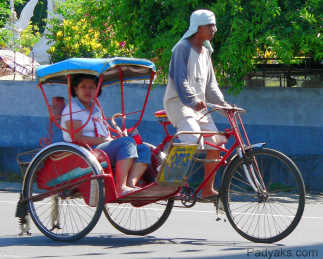
Their resourcefulness comes through in a myriad of ways, but it is most easily on display when you are in the market area. There you have the convergence of the two big aspects of the culture: the farm and the city. You see farmers who live in simple wooden houses in a village with a dirt path for a road who get up ridiculously early to catch a jeepney (with all their produce) into the city so they can get to the market to their stall. You see the pedicab driver who is sweating profusely under his shirt that he has wrapped around his head to keep the sun off with some knock-off Ray-bans to keep the sun out of his eyes riding around on his rig (decorated with colorfully recycled items) looking for passengers. All over the market area you see this resourcefulness and for an American who is "fresh off the boat" it may seem almost sad and disconcerting, seeing as quite a bit of the need for this type of resourcefulness is due to poverty, simply having to recycle and reuse items because they can't always afford new things. Down the street, near a school, classes have taken to recycling soda bottles for gardening, and ingeniously saved space with the planting of flowers and herbs.
Now, here is why I think that having Walmart would be horrible for the Philippines: If we as Americans move to a small town and for some reason unknown to mankind, there is no Walmart, then we may seriously wonder how in the world we will survive. We may wonder how in the world we are supposed to buy groceries or car parts or movies or furniture or home repair supplies or any number of other goods and services. The Philippines has a few malls that have their own department stores and grocery stores inside that do function in some ways as a one-stop-shop, but these are out of the budget for quite a bit of the country. But even middle class families (and I'm sure upper class folks too) have a vein of resourcefulness inside, and they often don't seem feel lost and adrift in the world when stuff breaks or they need a quick fix for x,y, or z. Americans tend to, sans Walmart. Filipinos, in some sense, are free from the reliance on big stores like Walmart to provide all they need or want. They are able to get things done without the need to run to the big chain stores to make sure they have exactly the right tools or supplies. Don't get me wrong, there are specialty shops for bike parts, hardware stores, etc. and people will go and get what they need from these establishments if they need to. But it seems like if, in a pinch, something needs to get fixed and you are in the jungle on a dirt path and your bike breaks down, well...you simply deal with it how you can. More often than not, it works out. If it holds together long enough, you can indeed go to the bike parts shop to get the parts you need to make the needed repairs. But the resourcefulness of the average Filipino is quite impressive, and it is because of their attitude towards recycling and reusing items that I think that Walmart would actually take something away from the culture.
This suggestion comes from a certain Robbie Waller, who would like me to write about the need for Walmart in the Philippines.
In some sense, the Philippines would benefit greatly from Walmart. People would be able to get everything they need (and a bunch that they don't need) in a convenient one-stop-shop. People would have everything they need for fixing things and not have to jerry-rig the things that are broken. But in other ways the Philippines does not need Walmart. I think that while yeah, of course, obviously, it would make shopping easier, it would also do something horrible to the culture of the Philippines. The way I see it, Filipino people are some pretty resourceful men and women. They have lived through multiple centuries of being subjects to other countries, influenced by still others, and now they are (from what I can tell) in transition still. In some ways the vast majority of people are still trying to figure out what it means to be Filipino, and what exactly being Filipino entails. This transition and influence has caused Filipinos to be very resourceful and to look at problems and challenges from a very different perspective.
Now, here is why I think that having Walmart would be horrible for the Philippines: If we as Americans move to a small town and for some reason unknown to mankind, there is no Walmart, then we may seriously wonder how in the world we will survive. We may wonder how in the world we are supposed to buy groceries or car parts or movies or furniture or home repair supplies or any number of other goods and services. The Philippines has a few malls that have their own department stores and grocery stores inside that do function in some ways as a one-stop-shop, but these are out of the budget for quite a bit of the country. But even middle class families (and I'm sure upper class folks too) have a vein of resourcefulness inside, and they often don't seem feel lost and adrift in the world when stuff breaks or they need a quick fix for x,y, or z. Americans tend to, sans Walmart. Filipinos, in some sense, are free from the reliance on big stores like Walmart to provide all they need or want. They are able to get things done without the need to run to the big chain stores to make sure they have exactly the right tools or supplies. Don't get me wrong, there are specialty shops for bike parts, hardware stores, etc. and people will go and get what they need from these establishments if they need to. But it seems like if, in a pinch, something needs to get fixed and you are in the jungle on a dirt path and your bike breaks down, well...you simply deal with it how you can. More often than not, it works out. If it holds together long enough, you can indeed go to the bike parts shop to get the parts you need to make the needed repairs. But the resourcefulness of the average Filipino is quite impressive, and it is because of their attitude towards recycling and reusing items that I think that Walmart would actually take something away from the culture. Saturday, June 16, 2018
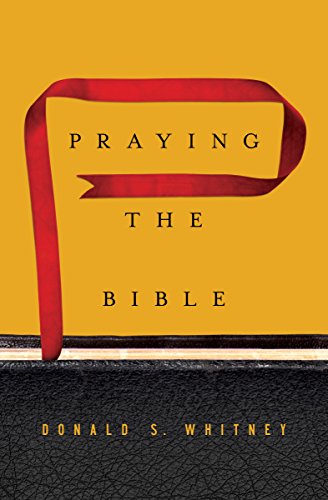
A Review of Praying the Bible by Don Whitney
NOTE: Since I haven't posted an article, or book review, in a while, it seems good to remind my few readers that in no way do I profit from these reviews. These are simply books that I feel have helped me either in my personal walk with God, or in ministry, or it has made me think about a topic in a different way. Dr. Whitney is not paying me for this paltry review, nor has anyone else. Enjoy!
Now, I love reading theology books. I love the nuance and the precision that it takes to nail down and explain certain doctrines or ideas. Yet, when I look at some of my books, I sigh, because there is simply no logical way that I will ever actually read the whole thing; they are simply too long.
I also love prayer. Wait, no. That's not quite true. I love the idea of prayer, but the reality is often lacking. I lose my train of thought. Or what feels like forever to pray was really only a few minutes. Or I sort of repeat the same things that I normally pray for and feel really discouraged by the whole thing. Because of this, my prayer life suffers, and every sermon or biblical text on prayer feels like the condemnation of a shameful dirty secret: a Christian who can't pray!
If you just so happen to feel the same way, then I would highly (is there another superlative that makes it more forceful? If there is, use that) recommend Praying the Bible by Donald Whitney.
Dr. Whitney is a professor at THE Southern Baptist Theological Seminary in Kentucky and he deals quite a bit with practical spiritual disciplines. His books on spiritual disciplines (both personal and corporate) are pretty good, but Praying the Bible is just too legit. Why? Well I'm glad you asked....
This book tackles a perennial problem, prayer. In a rather short book, only ten chapter clocking in at about 106 pages (including two indexes), Whitney packs a punch that, given the time it takes to read the book, should radically transform your prayer life. Now, before I start sounding like I'm selling a magic pill that cures cancer, let's break down the book:
Chapter one outlines the problem, and in chapter two Whitney gives the solution to a stale prayer life: praying through the Bible. in chapter three he gives the method for using the Bible as a guide to prayer (spoiler: it may not be just as you think). In Chapter four he deals a bit more with the method and chapters five and six deal with some good examples of praying through the Psalms and other biblical books. In chapter seven Whitney "forces" you to pray through a psalm, heavily suggesting that the reader stop reading until the exercise has been done. Chapter eight walks through common responses to his method. Chapter nine, barely a few pages, sums up the first chunk of the book before going to chapter ten, which covers historical examples of his method.
In my opinion, this book needs to be handed out to church members by pastors for free, until everyone in the congregation has at least one copy in each household. I cannot recommend this book enough for those who feel like their prayer life is stale, or even sadder, seemingly nonexistent. For those who will put in the work to actually practice this "revolutionary" method for rich prayers it pays dividends almost immediately.
The only real complaint that I have is that the book is too long. Whitney labors the point in a few places, seemingly repeating himself just to reach a minimum of pages by the publisher. This could have probably been an in-depth pamphlet and would have been just as eye-opening to read through.
Even with this minor thing, I would highly recommend this book to anyone and everyone who may happen to read this!
Now, I love reading theology books. I love the nuance and the precision that it takes to nail down and explain certain doctrines or ideas. Yet, when I look at some of my books, I sigh, because there is simply no logical way that I will ever actually read the whole thing; they are simply too long.
I also love prayer. Wait, no. That's not quite true. I love the idea of prayer, but the reality is often lacking. I lose my train of thought. Or what feels like forever to pray was really only a few minutes. Or I sort of repeat the same things that I normally pray for and feel really discouraged by the whole thing. Because of this, my prayer life suffers, and every sermon or biblical text on prayer feels like the condemnation of a shameful dirty secret: a Christian who can't pray!
If you just so happen to feel the same way, then I would highly (is there another superlative that makes it more forceful? If there is, use that) recommend Praying the Bible by Donald Whitney.
Dr. Whitney is a professor at THE Southern Baptist Theological Seminary in Kentucky and he deals quite a bit with practical spiritual disciplines. His books on spiritual disciplines (both personal and corporate) are pretty good, but Praying the Bible is just too legit. Why? Well I'm glad you asked....
This book tackles a perennial problem, prayer. In a rather short book, only ten chapter clocking in at about 106 pages (including two indexes), Whitney packs a punch that, given the time it takes to read the book, should radically transform your prayer life. Now, before I start sounding like I'm selling a magic pill that cures cancer, let's break down the book:
Chapter one outlines the problem, and in chapter two Whitney gives the solution to a stale prayer life: praying through the Bible. in chapter three he gives the method for using the Bible as a guide to prayer (spoiler: it may not be just as you think). In Chapter four he deals a bit more with the method and chapters five and six deal with some good examples of praying through the Psalms and other biblical books. In chapter seven Whitney "forces" you to pray through a psalm, heavily suggesting that the reader stop reading until the exercise has been done. Chapter eight walks through common responses to his method. Chapter nine, barely a few pages, sums up the first chunk of the book before going to chapter ten, which covers historical examples of his method.
In my opinion, this book needs to be handed out to church members by pastors for free, until everyone in the congregation has at least one copy in each household. I cannot recommend this book enough for those who feel like their prayer life is stale, or even sadder, seemingly nonexistent. For those who will put in the work to actually practice this "revolutionary" method for rich prayers it pays dividends almost immediately.
The only real complaint that I have is that the book is too long. Whitney labors the point in a few places, seemingly repeating himself just to reach a minimum of pages by the publisher. This could have probably been an in-depth pamphlet and would have been just as eye-opening to read through.
Even with this minor thing, I would highly recommend this book to anyone and everyone who may happen to read this!
Saturday, February 17, 2018
A small hiatus
Hey guys!
So as most of you know, we have made it back to America for a few months of rest. We had a team come in January to help us pack up the house and to help do some survey work out on Dinagat Island. Then they were nice enough to let us travel back to LA with them before they went to Dallas and we went to Memphis. We have seen family and friends and have had the opportunity to tell others about what God is doing in the Philippines while trying to adjust back to winterish weather.
Being back Stateside for a while we may not write as much as we have been. After talking through some of our communications (blog and newsletter), I have decided to trim back how often I post articles here, I'm thinking twice a month for a while. That being said, I do still want to blog about what is happening in our lives, as often as I get a chance to.
For those of you who we have seen already, hello again! For those of you we will see in the next few months, we are looking forward to it! For those of you we may not have the chance to see, we will still miss you!
Have a good rest of the week.
So as most of you know, we have made it back to America for a few months of rest. We had a team come in January to help us pack up the house and to help do some survey work out on Dinagat Island. Then they were nice enough to let us travel back to LA with them before they went to Dallas and we went to Memphis. We have seen family and friends and have had the opportunity to tell others about what God is doing in the Philippines while trying to adjust back to winterish weather.
Being back Stateside for a while we may not write as much as we have been. After talking through some of our communications (blog and newsletter), I have decided to trim back how often I post articles here, I'm thinking twice a month for a while. That being said, I do still want to blog about what is happening in our lives, as often as I get a chance to.
For those of you who we have seen already, hello again! For those of you we will see in the next few months, we are looking forward to it! For those of you we may not have the chance to see, we will still miss you!
Have a good rest of the week.
Monday, December 25, 2017
Christmas in the Philippines
Caroling is popular here. Small mobs of kids walk around singing bad renditions of English Christmas songs. Most of the time we hear 'We Wish You A Merry Christmas'. They will stand outside of our gate for about twenty minutes singing "we wish you a merry chis-mas, we will you a merry chis-mas, we wish you a merry chis-mas, and a happy new year! Advance merry chis-mas! Advance happy New Year!". This happens every night. Sometimes twice a night, with the same mob. They are begging for money or food. Sometimes they even come up and just say, "Hey, merry Christmas, give me money!".
One night we decided that we would tell kids to come back on Christmas Eve and we would hand out something then. While I was talking with these kids, I asked them what they were wanting. "Bisan unsa" (whatever). What were they going to do with it? "Magdala ko ani sa simbahan" (I'll take it to the church) Wait, the catholic church? Quick nod. Are you catholic? Violent head shake and a loud "dili!" (no). Something tells me they weren't really going to the church....
With that little story we are ushered into the Christmas season in the Philippines. Lights were going up way back in October (no respect for Thanksgiving here either!) and around the middle of November is when the caroling started. As far as we have learned, Christmas may be celebrated by families here, but unless you are Catholic, Christmas is more or less off limits in the church. So there are no decorations or Christmas trees up. No Christmas Eve service is planned, and no Christmas hymns will be sung, for the most part. With our church back in Texas being such a HUGE part of our lives, and with all the Christmas and Advent stuff they have going on even now, it is another big glaring reminder of the cultural differences between the US and the PH.
Another big holiday deal for us is the familial aspect. Even while living in Texas we would be back in Arkansas for Christmas Eve with one grandparent, Christmas morning with another, and Christmas dinner with yet another. The whole two days was spent with family and just hanging out with each other. But now we are here without our families and that is going to be difficult on us this year. I'm sure we will try to video chat with everyone, but it won't be the same.
Now, before anybody reading this thinks we're moping around here, just hold on a moment! We were in a tight spot emotionally a little while ago, but now we are getting back out and about, back on our feet, and everyone is feeling much better. But we still have to be able to make Christmas traditions anew in the face of our new cultural living situation. There are things that we just won't be able to do, like any sort of Christmas light house hunting via car, or eggnog, or ugly Christmas sweaters(we could but we would dehydrate very quickly)!
But we have to, in my mind, do two things with regards to Christmas: the first is make sure that the reason we are wanting to celebrate is more than just cultural or familial tradition and the second is that we need to be able to adapt to what we can do and make family traditions of our own that are not necessarily rooted in all of the American cultural Christmas trappings.
If we are only wanting to celebrate Christmas is because that's what we have done in the past, a tradition, like the Fourth of July, then we have a problem. If it is because we are wanting to praise God for the gift of His Son who came to earth so that He could die for us, then that is something different all together right?
And the traditions that go along with the holiday are important too. Is what we are doing merely an American holiday tradition? Or is it something that is rooted in the biblical story of redemption and the Gospel?
This past week we had a time of worship and fellowship with some other missionaries here and Hollie led a discussion about the theology of the song 'O Come O Come Emanuel' and how it really points to the reality of Christ and the Incarnation and how through Him alone we have the hope that defeats the tyranny of Satan and his dominion of death and hell. Something we need to do as Christians is take our own holiday stuff and check it against the Bible, to see if what we are doing is merely culturally Christian or if it is rooted in the Gospel. If it's not, do we really need it to be an essential part of our Christmas celebration (nice addition maybe but that's about it right?)?
Anyway, Hollie talking about this song reminded me that even an amazing song like that need to be grounded in the biblical story and point us to our hope in Christ.
Isn't that the real reason for the season?
One night we decided that we would tell kids to come back on Christmas Eve and we would hand out something then. While I was talking with these kids, I asked them what they were wanting. "Bisan unsa" (whatever). What were they going to do with it? "Magdala ko ani sa simbahan" (I'll take it to the church) Wait, the catholic church? Quick nod. Are you catholic? Violent head shake and a loud "dili!" (no). Something tells me they weren't really going to the church....
With that little story we are ushered into the Christmas season in the Philippines. Lights were going up way back in October (no respect for Thanksgiving here either!) and around the middle of November is when the caroling started. As far as we have learned, Christmas may be celebrated by families here, but unless you are Catholic, Christmas is more or less off limits in the church. So there are no decorations or Christmas trees up. No Christmas Eve service is planned, and no Christmas hymns will be sung, for the most part. With our church back in Texas being such a HUGE part of our lives, and with all the Christmas and Advent stuff they have going on even now, it is another big glaring reminder of the cultural differences between the US and the PH.
Another big holiday deal for us is the familial aspect. Even while living in Texas we would be back in Arkansas for Christmas Eve with one grandparent, Christmas morning with another, and Christmas dinner with yet another. The whole two days was spent with family and just hanging out with each other. But now we are here without our families and that is going to be difficult on us this year. I'm sure we will try to video chat with everyone, but it won't be the same.
Now, before anybody reading this thinks we're moping around here, just hold on a moment! We were in a tight spot emotionally a little while ago, but now we are getting back out and about, back on our feet, and everyone is feeling much better. But we still have to be able to make Christmas traditions anew in the face of our new cultural living situation. There are things that we just won't be able to do, like any sort of Christmas light house hunting via car, or eggnog, or ugly Christmas sweaters(we could but we would dehydrate very quickly)!
But we have to, in my mind, do two things with regards to Christmas: the first is make sure that the reason we are wanting to celebrate is more than just cultural or familial tradition and the second is that we need to be able to adapt to what we can do and make family traditions of our own that are not necessarily rooted in all of the American cultural Christmas trappings.
If we are only wanting to celebrate Christmas is because that's what we have done in the past, a tradition, like the Fourth of July, then we have a problem. If it is because we are wanting to praise God for the gift of His Son who came to earth so that He could die for us, then that is something different all together right?
And the traditions that go along with the holiday are important too. Is what we are doing merely an American holiday tradition? Or is it something that is rooted in the biblical story of redemption and the Gospel?
This past week we had a time of worship and fellowship with some other missionaries here and Hollie led a discussion about the theology of the song 'O Come O Come Emanuel' and how it really points to the reality of Christ and the Incarnation and how through Him alone we have the hope that defeats the tyranny of Satan and his dominion of death and hell. Something we need to do as Christians is take our own holiday stuff and check it against the Bible, to see if what we are doing is merely culturally Christian or if it is rooted in the Gospel. If it's not, do we really need it to be an essential part of our Christmas celebration (nice addition maybe but that's about it right?)?
Anyway, Hollie talking about this song reminded me that even an amazing song like that need to be grounded in the biblical story and point us to our hope in Christ.
Isn't that the real reason for the season?
Friday, December 15, 2017
A Theology Post.
This is a theology post. That means that it is supposed to be theological in nature, and have some level of smartypants theological content. But, then again, isn't everything we as Christians do supposed to be theological in nature? Isn't everything supposed to be centered in and around the study of God and how that plays out in our daily lives (which is what theology really is)?
Think about this: How do you think about theology? How to you think about God day in and day out? How do you think about how your family culture is shaped by your faith? How does our Christian faith in the finished work of Christ factor into how we do our jobs? Raise our kids? See those outside the faith?
We in the West are so compartmentalized in our thinking that we tend to literally only set aside Sundays for the worship of God. We have our work-life, our family-life, and our church-life. This is saying essentially: This way of me operating and living and my morals or actions are this way during this time and they are different at other times. And even as we protest that we may think back to how, subtlety, our thinking and actions may be different depending on the situation we find ourselves in.
If we find that we are being "more spiritual" on Sunday mornings (because we can't forget about that great American idol, Sunday night football) and Wednesday evenings than when we are sitting down with our co-workers during our lunch breaks on Tuesday...that's a problem.
Why?
Because in 1 Corinthians 10:31 we see that we are to do everything for the glory of God.
Now in context, the verse is involved in the conversation Paul is having with the Corinthian believers about offending the conscience and Christian liberty. In the larger context of chapter 10 it is nestled at the end of the chapter in which idolatry and meat offered to idols (and therefore eating meat and offending the conscience of someone) and so part of the take away from chapter 10 is the need for believers to look out for the weaker brother and to help strengthen him/her in the faith by helping to bear their conscience. This is essentially Christian living, which, if you read the New Testament, is never done in isolation. We have freedom in conscience, but it is for the service of our fellow believer. We don't eat meat offered to idols because it may burn the conscience of a weaker brother, causing him or her to stumble into sin. We see in this chapter and specifically this verse, that we are to live this way for God's glory. When we start to live this way, with God's glory as the reasoning for doing x, y, and z, we begin to lose the separate compartments that we have built into our lives. Everything we do begins to lose it's own inherent in your face urgency and fades into a daily day long pattern of seeking to bring glory to our Savior and King as we seek to strengthen our fellow believers.
Now how in the world are we supposed to do that? I mean, we have so much fighting against us don't we? The busyness and urgency with which we find our days seems to almost beg that it is impossible to break the cycle of compartmentalization and to see everything as something that can be holy is just hard to do. But there is freedom in fighting through that fight. There is freedom in finding out that doing the laundry in a way that is to bring glory to God (simply seeking to do it well to serve your family and therefore serve God) begins to make the chore itself seem less like a chore over time.
It turns into a joy to do the dishes (by hand!) or the laundry or balance the checkbook, or doing that report for your boss, whatever it is. There is holiness and grace to be found in seeing things as means to the end: glorifying God.
But now hold on, this can still be refined a wee bit more can't it? I mean, doing things for the glory of God? That could be a Jewish phrase, or even a Muslim command, so how does doing things for God's glory look explicitly Christian? Ah, that's a good question, don't you think? What makes our actions "Christian"? Have you ever thought about that? When we reflect on the questions that I posited at the beginning of this post, one thing keeps coming to mind: the finished work of Christ on the cross on our behalf.
Obviously, Christ is what makes us Christian and not Jewish or Muslim. Christ is what makes us believers in the true God and not the false god Allah or the misunderstood (and false) view of God that the Jews have. But it is not simply Christ that we find ourselves anchoring to, but it is the totality of who He is and what He has done. We rest not in the simple person of Jesus of Nazareth the carpenter, but Jesus Christ, the Second Person of the Holy Trinity, who took on the flesh of man, lived the life of perfect obedience to God's Law and because of His Innocence and Perfection, took the place of sinful men on the cross so that through His death, and His glorious resurrection, we may get back everything that was lost in Adam. We rest on this work, on this Person. This means that when we are doing things for the glory of God we are not doing anything to satisfy anyone or anything and attempt to bring about our own salvation or justification, heck, even our own sanctification. We do things for the glory of God and subsequently the love of our neighbor because we have been saved and justified through the work of faith in the finished work of Christ on the cross. We aren't trying to earn anything (heaven forbid!) but everything we do, when done for the glory of God is us rejoicing in His mercy and goodness and trying to show that same to our neighbors.
So how do you think about theology? How do you make your life revolve around Christ and His cross? I don't think it will necessarily look the same for everyone, and that's ok. But we need to prayerfully seek God's glory and set time aside to seek His face and to try to pray through orienting our lives around Him. We need to take the time to fight the fight of de-compartmentalization of our lives and seek to see everything as a means to glorify our God and King through resting in who we are inside of Christ. This means that the best way to be a Christian architect is not to only design beautiful churches, but to do the job in an exemplary way that shows that you take pride in your gifts and talents that God gave you and that you use them to help others and love them in the same way that God loves you.This is being Salt and Light. This is being a Christian. We also need to remember that we if we are Christian architects that we are Christians first that happen to have a job as an architect. The best way for you to be a Christian mother or father or ad executive or whatever it is, is by doing everything out of a love for God and neighbor (whoever that may be) and seeking to bring honor and glory to the God that redeemed us and to seek to do so as consistently as possible throughout our whole lives. We need to seek to love and to show God's love to everyone we meet, to love our neighbor as ourselves, and to seek to lift up and strengthen the family of God that we meet day in and day out through love.
All for the glory of God.
Think about this: How do you think about theology? How to you think about God day in and day out? How do you think about how your family culture is shaped by your faith? How does our Christian faith in the finished work of Christ factor into how we do our jobs? Raise our kids? See those outside the faith?
We in the West are so compartmentalized in our thinking that we tend to literally only set aside Sundays for the worship of God. We have our work-life, our family-life, and our church-life. This is saying essentially: This way of me operating and living and my morals or actions are this way during this time and they are different at other times. And even as we protest that we may think back to how, subtlety, our thinking and actions may be different depending on the situation we find ourselves in.
If we find that we are being "more spiritual" on Sunday mornings (because we can't forget about that great American idol, Sunday night football) and Wednesday evenings than when we are sitting down with our co-workers during our lunch breaks on Tuesday...that's a problem.
Why?
Because in 1 Corinthians 10:31 we see that we are to do everything for the glory of God.
Now in context, the verse is involved in the conversation Paul is having with the Corinthian believers about offending the conscience and Christian liberty. In the larger context of chapter 10 it is nestled at the end of the chapter in which idolatry and meat offered to idols (and therefore eating meat and offending the conscience of someone) and so part of the take away from chapter 10 is the need for believers to look out for the weaker brother and to help strengthen him/her in the faith by helping to bear their conscience. This is essentially Christian living, which, if you read the New Testament, is never done in isolation. We have freedom in conscience, but it is for the service of our fellow believer. We don't eat meat offered to idols because it may burn the conscience of a weaker brother, causing him or her to stumble into sin. We see in this chapter and specifically this verse, that we are to live this way for God's glory. When we start to live this way, with God's glory as the reasoning for doing x, y, and z, we begin to lose the separate compartments that we have built into our lives. Everything we do begins to lose it's own inherent in your face urgency and fades into a daily day long pattern of seeking to bring glory to our Savior and King as we seek to strengthen our fellow believers.
Now how in the world are we supposed to do that? I mean, we have so much fighting against us don't we? The busyness and urgency with which we find our days seems to almost beg that it is impossible to break the cycle of compartmentalization and to see everything as something that can be holy is just hard to do. But there is freedom in fighting through that fight. There is freedom in finding out that doing the laundry in a way that is to bring glory to God (simply seeking to do it well to serve your family and therefore serve God) begins to make the chore itself seem less like a chore over time.
It turns into a joy to do the dishes (by hand!) or the laundry or balance the checkbook, or doing that report for your boss, whatever it is. There is holiness and grace to be found in seeing things as means to the end: glorifying God.
But now hold on, this can still be refined a wee bit more can't it? I mean, doing things for the glory of God? That could be a Jewish phrase, or even a Muslim command, so how does doing things for God's glory look explicitly Christian? Ah, that's a good question, don't you think? What makes our actions "Christian"? Have you ever thought about that? When we reflect on the questions that I posited at the beginning of this post, one thing keeps coming to mind: the finished work of Christ on the cross on our behalf.
Obviously, Christ is what makes us Christian and not Jewish or Muslim. Christ is what makes us believers in the true God and not the false god Allah or the misunderstood (and false) view of God that the Jews have. But it is not simply Christ that we find ourselves anchoring to, but it is the totality of who He is and what He has done. We rest not in the simple person of Jesus of Nazareth the carpenter, but Jesus Christ, the Second Person of the Holy Trinity, who took on the flesh of man, lived the life of perfect obedience to God's Law and because of His Innocence and Perfection, took the place of sinful men on the cross so that through His death, and His glorious resurrection, we may get back everything that was lost in Adam. We rest on this work, on this Person. This means that when we are doing things for the glory of God we are not doing anything to satisfy anyone or anything and attempt to bring about our own salvation or justification, heck, even our own sanctification. We do things for the glory of God and subsequently the love of our neighbor because we have been saved and justified through the work of faith in the finished work of Christ on the cross. We aren't trying to earn anything (heaven forbid!) but everything we do, when done for the glory of God is us rejoicing in His mercy and goodness and trying to show that same to our neighbors.
So how do you think about theology? How do you make your life revolve around Christ and His cross? I don't think it will necessarily look the same for everyone, and that's ok. But we need to prayerfully seek God's glory and set time aside to seek His face and to try to pray through orienting our lives around Him. We need to take the time to fight the fight of de-compartmentalization of our lives and seek to see everything as a means to glorify our God and King through resting in who we are inside of Christ. This means that the best way to be a Christian architect is not to only design beautiful churches, but to do the job in an exemplary way that shows that you take pride in your gifts and talents that God gave you and that you use them to help others and love them in the same way that God loves you.This is being Salt and Light. This is being a Christian. We also need to remember that we if we are Christian architects that we are Christians first that happen to have a job as an architect. The best way for you to be a Christian mother or father or ad executive or whatever it is, is by doing everything out of a love for God and neighbor (whoever that may be) and seeking to bring honor and glory to the God that redeemed us and to seek to do so as consistently as possible throughout our whole lives. We need to seek to love and to show God's love to everyone we meet, to love our neighbor as ourselves, and to seek to lift up and strengthen the family of God that we meet day in and day out through love.
All for the glory of God.
Friday, December 8, 2017
Review of The Distinctives of Baptist Theology
NOTE AND DISCLAIMER: I am a horrible theologian and I am even worse at summarizing complex theological systems in very short space, so take what I am writing here as a feeble best attempt, and buy the book so that you can get a much better explanation.
This short book (about 200 pages) written by Pascal Denault is a fantastic comparison between the two basic forms of covenant theology inside of what could be labeled as forms of Puritan federalism, which are ways of understanding how God has dealt with humanity through history. Mr. Denault (a French speaking Canadian Reformed Baptist Theologian) does a great job outlining the Presbyterian model of covenant theology and the Baptist model and does so from not only primary sources but he uses Scripture within the primary sources to highlight the differences between the two in favor of Baptist covenant theology.
Now I suppose I may need to back-up a bit and explain what in the world I'm talking about. Most of us know what a covenant is: a formal agreement between two (or more) parties who agree on certain stipulations and are expected to uphold their end of the agreement. The most notable biblical covenants would be the Mosaic Covenant and the New Covenant. In these covenants God says that He will do A as long as those benefiting from the covenant does B (or in the case of the New Covenant, Jesus does A and B on our behalf). These covenants, and others, are the basis of God's relations with humanity throughout history according to Covenant Theology. This is over and against dispensation theology, in which God deals radically different with humans in each and every epoch of human history. To give a bit more of an example, Covenant Theology posits that God deals the same way with all humanity throughout time, and the covenants that pepper the biblical text and salvation history do not change how God deals with us. Dispensational theology would actually say that in any given epoch or dispensation of time, God deals with humanity (in terms of how one is saved) in very different ways. With this very truncated background of these two basic systems of how the Bible is laid out we can continue our talk about the book!

So Denault starts with covenant theology, which was the basic theological framework that theologians were operating with until the 19th century, and shows the internal struggle between English Dissenters during the 17th and 18th centuries between these two differing types of covenant theology.
The Presbyterian model essentially says that what we would call the Covenant of Grace was in effect and operating during the Old Covenant of Moses. This means that the people were saved under the Mosaic covenant as it related to grace as it was given through faith. When we get to the New Covenant under Christ we don't really have a new covenant, but a different version of the old one that had been in effect for thousands of years beforehand. This is the basic foundation of infant baptism within the Presbyterian churches(more or less, see the disclaimer at the top). Since all babies were brought into the covenant under Moses and then some had faith and were counted as believers and some were not, Presbyterians were able to justify infant baptism by recognizing that covenant still being in effect but viewed and administered differently under Christ. So where Israelites had unbelieving children inside the covenant community under Moses, Presbyterians can (possibly) have unbelieving children in the covenant community under Christ.
This model of covenant theology was not quite in jive with how the Baptists viewed the New Covenant under Christ. Hanging out extensively in Hebrews, Denault and the Baptists show that the New covenant under Christ is indeed a brand new covenant of grace that only those who will experience salvation can actually be members of the covenant community of believers. Basically the Covenant of Works was for Adam and the Garden of Eden where salvation was possible under following the Law that God had given him. The Mosaic Covenant (along with Abrahamic and Noahide and others) were shadows that pointed to and promised the Covenant of Grace, but did not bring it about. That was done by Christ on the Cross by His blood. The very newness of the New Covenant is so radically different from the Old that it makes sense that it is so new and special and could only do things that the old covenants pointed to, like actually saving those who were inside the covenant community, or to put another way, only those who are being saved (and nobody else) are inside the covenant, and therefore inside the covenant community.
Denault uses the actual writings exclusively from both Presbyterian and Baptist theologians from England during the 17th and 18th centuries to explain and show what each side believed without really putting words into either sides mouths. He deals fairly with both sides and quotes verbatim and simply reiterates what was already said quite clearly by both sides, even when they use Scripture to back up their claims. This book was a good, quick read (even for all the semi-heady concepts), and I would highly recommend it to anyone who has ever looked as a baptist church and a presbyterian church and wondered what the real difference was. This book helps explain probably the single biggest difference between the two groups. Denault did a very good job, and this book is definitely worth your time.
So if you want to actually understand any of what the book is really about, or if you want to argue with your Presbyterian friends and prove infant baptism as being biblically inconsistent, then pick up your own copy here.
This short book (about 200 pages) written by Pascal Denault is a fantastic comparison between the two basic forms of covenant theology inside of what could be labeled as forms of Puritan federalism, which are ways of understanding how God has dealt with humanity through history. Mr. Denault (a French speaking Canadian Reformed Baptist Theologian) does a great job outlining the Presbyterian model of covenant theology and the Baptist model and does so from not only primary sources but he uses Scripture within the primary sources to highlight the differences between the two in favor of Baptist covenant theology.
Now I suppose I may need to back-up a bit and explain what in the world I'm talking about. Most of us know what a covenant is: a formal agreement between two (or more) parties who agree on certain stipulations and are expected to uphold their end of the agreement. The most notable biblical covenants would be the Mosaic Covenant and the New Covenant. In these covenants God says that He will do A as long as those benefiting from the covenant does B (or in the case of the New Covenant, Jesus does A and B on our behalf). These covenants, and others, are the basis of God's relations with humanity throughout history according to Covenant Theology. This is over and against dispensation theology, in which God deals radically different with humans in each and every epoch of human history. To give a bit more of an example, Covenant Theology posits that God deals the same way with all humanity throughout time, and the covenants that pepper the biblical text and salvation history do not change how God deals with us. Dispensational theology would actually say that in any given epoch or dispensation of time, God deals with humanity (in terms of how one is saved) in very different ways. With this very truncated background of these two basic systems of how the Bible is laid out we can continue our talk about the book!

So Denault starts with covenant theology, which was the basic theological framework that theologians were operating with until the 19th century, and shows the internal struggle between English Dissenters during the 17th and 18th centuries between these two differing types of covenant theology.
The Presbyterian model essentially says that what we would call the Covenant of Grace was in effect and operating during the Old Covenant of Moses. This means that the people were saved under the Mosaic covenant as it related to grace as it was given through faith. When we get to the New Covenant under Christ we don't really have a new covenant, but a different version of the old one that had been in effect for thousands of years beforehand. This is the basic foundation of infant baptism within the Presbyterian churches(more or less, see the disclaimer at the top). Since all babies were brought into the covenant under Moses and then some had faith and were counted as believers and some were not, Presbyterians were able to justify infant baptism by recognizing that covenant still being in effect but viewed and administered differently under Christ. So where Israelites had unbelieving children inside the covenant community under Moses, Presbyterians can (possibly) have unbelieving children in the covenant community under Christ.
This model of covenant theology was not quite in jive with how the Baptists viewed the New Covenant under Christ. Hanging out extensively in Hebrews, Denault and the Baptists show that the New covenant under Christ is indeed a brand new covenant of grace that only those who will experience salvation can actually be members of the covenant community of believers. Basically the Covenant of Works was for Adam and the Garden of Eden where salvation was possible under following the Law that God had given him. The Mosaic Covenant (along with Abrahamic and Noahide and others) were shadows that pointed to and promised the Covenant of Grace, but did not bring it about. That was done by Christ on the Cross by His blood. The very newness of the New Covenant is so radically different from the Old that it makes sense that it is so new and special and could only do things that the old covenants pointed to, like actually saving those who were inside the covenant community, or to put another way, only those who are being saved (and nobody else) are inside the covenant, and therefore inside the covenant community.
Denault uses the actual writings exclusively from both Presbyterian and Baptist theologians from England during the 17th and 18th centuries to explain and show what each side believed without really putting words into either sides mouths. He deals fairly with both sides and quotes verbatim and simply reiterates what was already said quite clearly by both sides, even when they use Scripture to back up their claims. This book was a good, quick read (even for all the semi-heady concepts), and I would highly recommend it to anyone who has ever looked as a baptist church and a presbyterian church and wondered what the real difference was. This book helps explain probably the single biggest difference between the two groups. Denault did a very good job, and this book is definitely worth your time.
So if you want to actually understand any of what the book is really about, or if you want to argue with your Presbyterian friends and prove infant baptism as being biblically inconsistent, then pick up your own copy here.
Monday, December 4, 2017
Missionaries, Misconceptions, and the dashing of Idols
This is the first actual bit of "work" that I've done in a few weeks. I've been doing some meetings here, scheduled some stuff there, but I haven't been doing any reading or writing or anything that feels....substantial.
There are reasons for that, of course. We've been busy with life stuff. Meeting with friends, holiday stuff (we did Thanksgiving here!) and sickness has taken it's toll on our schedules with work and homeschooling. So yeah, this feels good, to sit down and write something. It feels good to put some thoughts to keyboard and process some of what has been going on, and if you haven't noticed, processing what we are going through is really kind of the point of this blog, along with stateside contact, of course.
In October, Rudy, our translator, took some well deserved time off to go spend time with his family in another city and all of a sudden, out of the clear blue sky, culture shock hit. Hard. We were suddenly struck with some of the little difficulties of living in the Philippines. We had more or less a month to sit in our house, not go anywhere or do anything really noteworthy. During this time a sort of weird grumpiness set in. We bemoaned silly things, like the lack of lunch meat, or the fact that I would wound or seriously maim someone to get my hands on some spinach, or some of the cultural situations that we would find ourselves in that really were not that out of the ordinary. But we were suffering from culture shock. We were missing America. We were missing the comforts and the American-ness of our home culture.
Some of you guys were able to see Hollie's video at SRC about her struggle with comfort and that idol here on the ground. That is a snapshot of what we have been going through for the past two months with the almost daily onslaught of creeping thoughts of "why?"
Why are we here? What in the world are we doing? Do we really need to be here? Is this the work God actually called us to? Nobody (seems to) even really wants us here, so why bother? Why not just go home and hide in a hole of shame and failure?
Why in the world were we going through this?
Aside from the fact that culture shock can happen to anyone, missionary or not, we were feeling like we were under attack and a general feeling of uselessness and a drain on resources of the church that lovingly kicked us out of the country almost a year ago. It was (and in some ways still is) an identity struggle we were going through. We were struggling with our identity and how we were wrapping ourselves up in "the work" instead of Christ. We were caught up in the feel and flow of what was or was not happening with work and that seemed more important that resting in Christ and our identity that is hidden with Him. We should have been resting in the knowledge that we are redeemed in Christ and that through and in Him we have finally found out who we really are and don't have to worry about keeping up with the performance of work or status or some sort of ministry facade. Instead we were worrying about the outer, the facing, the facade of what being a "good" missionary is, what our performance looked like and what we thought we should be doing. We, like so many Western Christians, have/are in the process of getting rid of this romantic view of international missions and what in our mind it should look like. We had this misconception and this wrong-headed view that we needed to be suffering more, being more on the front-line of mission work (you know, where the super dangerous and unreached people are, where there are few to no established churches) and not working here because there are lots of buildings and groups that call themselves "church" and I mean really, do we even need to be here?*
We were also going through a slow process of God dismantling our idol of mission work. Because we were struggling with misconceptions and our identity, we ended up in one way or another, turning being a missionary into an idol. Something we rested in. Something we found our security in. Instead of that beautiful and glorious rest from the race and the grind and the day to day flow of junk that we constantly wade through, the rest that we can only find in Christ, we ran headlong into that flow of junk. We turned our performance and identity as a respectable and upstanding citizens of the kingdom as missionaries into a trap and a snare, something we would check ourselves against and became chained to. We are not missionaries first and foremost. We are not that even secondly or thirdly! We are missionaries at like a fifth tier. There are more important things that that that we have as part of who we are. Yet because of the busyness of language school, acclimatizing to the culture (as best we could) and planning a trip for this past summer, we never really had the chance to check ourselves and see what and where we may be slipping into idolatry. It was only when we had a chance to slow down and be quiet in October into November that we were finally able to hear the convicting voice of the Holy Spirit telling us that we needed to pry the lump of dirt that we had lashed ourselves to out of our hands and drop it. We needed to let go of the pressure and the idea that we had of what all of this past year and the next few years means. Has it been easy going since coming to this conclusion? By no means! But we are continually in the process of being redirected from looking at ourselves and our circumstances (that we chose to come to!) and reorient everything around Christ. We have to. We can't survive here without being wrapped in and around Christ. Heck, we couldn't survive anywhere this side of heaven without being orienting our lives around Christ and the rest that He gives us.
'Indeed, I count everything as loss because of the
surpassing worth of knowing Christ Jesus my Lord. For
his sake I have suffered the loss of all things and count
them as rubbish, in order that I may gain Christ and be
found in him, not having a righteousness of my own that
comes from the law, but that which comes through faith
in Christ, the righteousness from God that depends on
faith— '
(Philippians 3:8-9)
Christ is what is worth knowing. Christ is worth losing everything and being able to let go of everything that we have. Christ is what makes all things, even good things, seem like rubbish compared to the knowing of Him. Through this knowing we gain Him and His righteousness, this righteousness does not depend on us at all, and so we don't have to perform works of the Law (because we can't measure up) or measure up to the standards of the little L law that we suffer through societal pressures (because we can't measure up to that either). We rest in Christ through faith, we get God's perfect righteousness through faith, and nothing we do...or don't do.
It is precisely because of Christ's work on our behalf that we are able to get His righteousness through faith. And because of that we can let go of the pressures that we have put upon ourselves and we can rest in knowing Him. Everything else can fall into their proper place when we put knowing Christ at the center of it all. This is our justification. This is our salvation. This is the most transformational aspect of Christianity, and it is often one of the most ignored aspects.
We need to recover this. We need to rediscover the freedom and joy that we find when we orient our lives around Christ and the cross and His finished work on our behalf. We have to do this. We have to be able to fix the anchor of our lives on the Rock and no matter how and what happens to us, no matter the storms and troubles that we face, we can rest secure that our anchor holds. This has nothing to do with us, but everything to do with the One we are anchored to.
So remember to pray for us as we are still learning and relearning this important lesson. And remember this lesson yourself the next time you are trying to measure up to your job, or your neighbors, or the idea of yourself in your head, or what you think being a Christian is. Remember Christ and that He is your rest and your righteousness.
*The answer is yes, because God called us and had placed us here, so of course this is where we need to be.
There are reasons for that, of course. We've been busy with life stuff. Meeting with friends, holiday stuff (we did Thanksgiving here!) and sickness has taken it's toll on our schedules with work and homeschooling. So yeah, this feels good, to sit down and write something. It feels good to put some thoughts to keyboard and process some of what has been going on, and if you haven't noticed, processing what we are going through is really kind of the point of this blog, along with stateside contact, of course.
In October, Rudy, our translator, took some well deserved time off to go spend time with his family in another city and all of a sudden, out of the clear blue sky, culture shock hit. Hard. We were suddenly struck with some of the little difficulties of living in the Philippines. We had more or less a month to sit in our house, not go anywhere or do anything really noteworthy. During this time a sort of weird grumpiness set in. We bemoaned silly things, like the lack of lunch meat, or the fact that I would wound or seriously maim someone to get my hands on some spinach, or some of the cultural situations that we would find ourselves in that really were not that out of the ordinary. But we were suffering from culture shock. We were missing America. We were missing the comforts and the American-ness of our home culture.
Some of you guys were able to see Hollie's video at SRC about her struggle with comfort and that idol here on the ground. That is a snapshot of what we have been going through for the past two months with the almost daily onslaught of creeping thoughts of "why?"
Why are we here? What in the world are we doing? Do we really need to be here? Is this the work God actually called us to? Nobody (seems to) even really wants us here, so why bother? Why not just go home and hide in a hole of shame and failure?
Why in the world were we going through this?
Aside from the fact that culture shock can happen to anyone, missionary or not, we were feeling like we were under attack and a general feeling of uselessness and a drain on resources of the church that lovingly kicked us out of the country almost a year ago. It was (and in some ways still is) an identity struggle we were going through. We were struggling with our identity and how we were wrapping ourselves up in "the work" instead of Christ. We were caught up in the feel and flow of what was or was not happening with work and that seemed more important that resting in Christ and our identity that is hidden with Him. We should have been resting in the knowledge that we are redeemed in Christ and that through and in Him we have finally found out who we really are and don't have to worry about keeping up with the performance of work or status or some sort of ministry facade. Instead we were worrying about the outer, the facing, the facade of what being a "good" missionary is, what our performance looked like and what we thought we should be doing. We, like so many Western Christians, have/are in the process of getting rid of this romantic view of international missions and what in our mind it should look like. We had this misconception and this wrong-headed view that we needed to be suffering more, being more on the front-line of mission work (you know, where the super dangerous and unreached people are, where there are few to no established churches) and not working here because there are lots of buildings and groups that call themselves "church" and I mean really, do we even need to be here?*
We were also going through a slow process of God dismantling our idol of mission work. Because we were struggling with misconceptions and our identity, we ended up in one way or another, turning being a missionary into an idol. Something we rested in. Something we found our security in. Instead of that beautiful and glorious rest from the race and the grind and the day to day flow of junk that we constantly wade through, the rest that we can only find in Christ, we ran headlong into that flow of junk. We turned our performance and identity as a respectable and upstanding citizens of the kingdom as missionaries into a trap and a snare, something we would check ourselves against and became chained to. We are not missionaries first and foremost. We are not that even secondly or thirdly! We are missionaries at like a fifth tier. There are more important things that that that we have as part of who we are. Yet because of the busyness of language school, acclimatizing to the culture (as best we could) and planning a trip for this past summer, we never really had the chance to check ourselves and see what and where we may be slipping into idolatry. It was only when we had a chance to slow down and be quiet in October into November that we were finally able to hear the convicting voice of the Holy Spirit telling us that we needed to pry the lump of dirt that we had lashed ourselves to out of our hands and drop it. We needed to let go of the pressure and the idea that we had of what all of this past year and the next few years means. Has it been easy going since coming to this conclusion? By no means! But we are continually in the process of being redirected from looking at ourselves and our circumstances (that we chose to come to!) and reorient everything around Christ. We have to. We can't survive here without being wrapped in and around Christ. Heck, we couldn't survive anywhere this side of heaven without being orienting our lives around Christ and the rest that He gives us.
'Indeed, I count everything as loss because of the
surpassing worth of knowing Christ Jesus my Lord. For
his sake I have suffered the loss of all things and count
them as rubbish, in order that I may gain Christ and be
found in him, not having a righteousness of my own that
comes from the law, but that which comes through faith
in Christ, the righteousness from God that depends on
faith— '
(Philippians 3:8-9)
Christ is what is worth knowing. Christ is worth losing everything and being able to let go of everything that we have. Christ is what makes all things, even good things, seem like rubbish compared to the knowing of Him. Through this knowing we gain Him and His righteousness, this righteousness does not depend on us at all, and so we don't have to perform works of the Law (because we can't measure up) or measure up to the standards of the little L law that we suffer through societal pressures (because we can't measure up to that either). We rest in Christ through faith, we get God's perfect righteousness through faith, and nothing we do...or don't do.
It is precisely because of Christ's work on our behalf that we are able to get His righteousness through faith. And because of that we can let go of the pressures that we have put upon ourselves and we can rest in knowing Him. Everything else can fall into their proper place when we put knowing Christ at the center of it all. This is our justification. This is our salvation. This is the most transformational aspect of Christianity, and it is often one of the most ignored aspects.
We need to recover this. We need to rediscover the freedom and joy that we find when we orient our lives around Christ and the cross and His finished work on our behalf. We have to do this. We have to be able to fix the anchor of our lives on the Rock and no matter how and what happens to us, no matter the storms and troubles that we face, we can rest secure that our anchor holds. This has nothing to do with us, but everything to do with the One we are anchored to.
So remember to pray for us as we are still learning and relearning this important lesson. And remember this lesson yourself the next time you are trying to measure up to your job, or your neighbors, or the idea of yourself in your head, or what you think being a Christian is. Remember Christ and that He is your rest and your righteousness.
*The answer is yes, because God called us and had placed us here, so of course this is where we need to be.
Friday, November 3, 2017
Undas and the Reformation in the Philippines
As most everybody knows, this week celebrated the 500th anniversary of when Martin Luther posted the 95 Theses on the door of the castle church in Wittenburg, Germany. The Protestant Reformation was kicked off from this otherwise normal event, as Luther and the Roman Catholic magesterium (popes, cardinals, bishops, so on) dug their heels in over the argument over the gospel and the final authority in the church. To Luther and the other Reformers, the Gospel was buried underneath all the junk of Roman Catholic tradition that had accrued over the years, with the teachings on indulgences and purgatory and the selling of "grace" by the popes being some of the most obscene displays of any sort of religious leadership, and it is the mess with indulgences that actually prompted the 95 Theses. Pressing into the conversation about church practices led to conversations about authority within the church itself. Luther began making arguments from Scripture and reasoned that practices or teachings that were not in the Bible need to be gotten rid of as they pollute and mess up the worship of God and how Christians practice their faith. The Catholics were swinging hard for the opposite: the gospel was not based on grace and faith alone but on the dependence of the person on the grace to be dispensed by the Catholic church itself. This also made sure to vest final authority not in the Bible, but in the Pope as the one who was in possession of the keys of the treasury of heaven, able to dispense grace as he saw fit.
It's odd that from our vantage point here in the Philippines I see (at least on the Internet) calls and questions about what the Reformation was about and if it is still a thing that is needed today. The questions and posts go like this: Catholics and Protestants believe basically the same things right? I mean, they both say they love Jesus and believe that it is by grace through faith in Christ and His work on the cross that we are saved, so it's all good! Besides, aren't there other things that we need to worry about right now like all the racial issues and abortion and radical Islam and radical atheism and the moral decline of the country and North Korea and that America is looking less like a Christian nation and looking more like....well, who knows! Aren't all these things more important than squabbles over doctrine and practice? Isn't the overwhelming situation in the world excuse enough to excuse Protestants and Catholics from arguing over something that happened 500 years ago so that they can band together and fight the culture war together?
There have been others, much smarter than me, who have dealt with this question. I'm not worried about all that now. Not really.
I think about the question of if the Reformation still matters as I ride in a tricycle that has prayer beads hanging right in my face. I think about the Reformation when I walk into a store and they have a small shelf with candles and a figure of Santo Niño so that they can gain his blessing in their work. I think about the fact that while Halloween has come and gone people here (Catholics and other Christians) are celebrating the festival of Undas.
This week school is out. People are off work, and it is the time of Undas here in the Philippines. The whole country has the week off because of this three day holiday. It may not be as flashy as Dia de los Muertos in Mexico, but Halloween, All Saints and All Souls Day(s) are a time when families go out to cemeteries and remember the dead. That in and of itself is not that bad or problematic, not at all. But they will take food and drink out to their departed family members and have a meal with them. They will say prayers for the dead, they will spend the two days at the grave site communing with their dead. Sometimes they do try to get an indulgence (still on the books in the Catholic church!) for their departed or say a Mass for the dead. But the streets are almost empty, as hundreds and hundreds of people go back to their family hometown so they can visit the resting places and offer sacrifices to the dead so they can intercede for the living.
So I don't really wonder about whether the Reformation is over or not, or whether or not the differences between Catholics and Protestants matter or not. Of course they do! My family and I currently live in the "most Christian country in Asia" that is a modern pre-Reformation Europe, in some small very rural areas the Bible is still located only in the church and the priest (when he is there) is the only one able to read and interpret the Bible for the people in the pews. The situation here is one in which what looks like work among an already "Christian" peoples is really work with pagans that pray for and to the dead, offer them food and drink, worship statues of people rather than the God who created them and think that by doing all of that plus other good works gets them into heaven. So we are working here among people who are believing a false Gospel (which Paul says is no Gospel at all!) and trying to get the few churches that are here and evangelical to get outside their own doors and preach the Gospel and hold out the true hope that they have found in Christ and His blood shed on the Cross!
So while some of us did celebrate the 500th of the beginning of the Reformation, we don't have to ask if it is over, we know it's not. We have the Word of God in English (and Cebuano), and we don't say the Mass every Sunday, and we get both the Cup and the Bread in the Lord's Supper, and we don't pray to the dead begging them to pray for us, and we (most importantly) have all of this because the Gospel has freed us from the legalistic bondage that worldly religion tries to tie us to, we have experienced the freedom that the Gospel brings us and we see the world through this lens.
Pray that the people here in the Philippines would also learn to see this way. Pray that they too would get all that we have, not because we are better or brighter than they are, but because we have heard and we have tasted and seen that our God and His Gospel is good.
It's odd that from our vantage point here in the Philippines I see (at least on the Internet) calls and questions about what the Reformation was about and if it is still a thing that is needed today. The questions and posts go like this: Catholics and Protestants believe basically the same things right? I mean, they both say they love Jesus and believe that it is by grace through faith in Christ and His work on the cross that we are saved, so it's all good! Besides, aren't there other things that we need to worry about right now like all the racial issues and abortion and radical Islam and radical atheism and the moral decline of the country and North Korea and that America is looking less like a Christian nation and looking more like....well, who knows! Aren't all these things more important than squabbles over doctrine and practice? Isn't the overwhelming situation in the world excuse enough to excuse Protestants and Catholics from arguing over something that happened 500 years ago so that they can band together and fight the culture war together?
There have been others, much smarter than me, who have dealt with this question. I'm not worried about all that now. Not really.
I think about the question of if the Reformation still matters as I ride in a tricycle that has prayer beads hanging right in my face. I think about the Reformation when I walk into a store and they have a small shelf with candles and a figure of Santo Niño so that they can gain his blessing in their work. I think about the fact that while Halloween has come and gone people here (Catholics and other Christians) are celebrating the festival of Undas.
This week school is out. People are off work, and it is the time of Undas here in the Philippines. The whole country has the week off because of this three day holiday. It may not be as flashy as Dia de los Muertos in Mexico, but Halloween, All Saints and All Souls Day(s) are a time when families go out to cemeteries and remember the dead. That in and of itself is not that bad or problematic, not at all. But they will take food and drink out to their departed family members and have a meal with them. They will say prayers for the dead, they will spend the two days at the grave site communing with their dead. Sometimes they do try to get an indulgence (still on the books in the Catholic church!) for their departed or say a Mass for the dead. But the streets are almost empty, as hundreds and hundreds of people go back to their family hometown so they can visit the resting places and offer sacrifices to the dead so they can intercede for the living.
So I don't really wonder about whether the Reformation is over or not, or whether or not the differences between Catholics and Protestants matter or not. Of course they do! My family and I currently live in the "most Christian country in Asia" that is a modern pre-Reformation Europe, in some small very rural areas the Bible is still located only in the church and the priest (when he is there) is the only one able to read and interpret the Bible for the people in the pews. The situation here is one in which what looks like work among an already "Christian" peoples is really work with pagans that pray for and to the dead, offer them food and drink, worship statues of people rather than the God who created them and think that by doing all of that plus other good works gets them into heaven. So we are working here among people who are believing a false Gospel (which Paul says is no Gospel at all!) and trying to get the few churches that are here and evangelical to get outside their own doors and preach the Gospel and hold out the true hope that they have found in Christ and His blood shed on the Cross!
So while some of us did celebrate the 500th of the beginning of the Reformation, we don't have to ask if it is over, we know it's not. We have the Word of God in English (and Cebuano), and we don't say the Mass every Sunday, and we get both the Cup and the Bread in the Lord's Supper, and we don't pray to the dead begging them to pray for us, and we (most importantly) have all of this because the Gospel has freed us from the legalistic bondage that worldly religion tries to tie us to, we have experienced the freedom that the Gospel brings us and we see the world through this lens.
Pray that the people here in the Philippines would also learn to see this way. Pray that they too would get all that we have, not because we are better or brighter than they are, but because we have heard and we have tasted and seen that our God and His Gospel is good.
Friday, October 27, 2017
Facebook Question #2
A while back I asked on facebook for questions for us to try to answer regarding Filipino culture. This, that's right, is one of those posts. This one right here, as you can tell by the title, is to answer question ang numerong duha (that's number two!)!
This comes from Judy Russell. She asks if we feel secluded due to our language differences.
This is a fantastic question, and the answer will take us about eight months back, all the way to February...
When we started taking language classes way back then we knew very little Cebuano, and I mean basically one or two phrases. And we later found out that we were using them horribly incorrect. We went through the course of material that our awesome teacher patiently guided us through in about 7 months, while the course is intended to take closer to a year or year and a half, if you really pace yourself (imagine a fire-hose attached to a hydrant, now rip the hose off and drink straight from the hydrant). We did learn quite a bit and are now going through the process of relearning more of the fine points that we may have missed in those whirlwind months of study.
I would say that with the level of language that we now have we can communicate fairly okay with people here. We're not as good as we need to be, no way near, but we have had times where we have been able to lead Bible Studies and share the Gospel in full-blown Cebuano, or have normal-ish conversations. Sometimes it feels like we are clicking and everything is firing on all cylinders and other times we have to sit and think and write out what we are going to say before we say it. It's really like when you are in line to order some food and you know what you want and you rehearse it five times in your head before you get up to the counter to actually order.
Yeah...it's like that.
But now, after all of the language classes that we have had, would I say that we feel secluded because of our language differences? In a way, of course! No matter how long we live here and get more and more proficient in speaking the language, we will always be missing out on idioms or figures of speech that native Filipinos will use. Or the speed in which some people speak will just be too quick for us.
A tip when speaking with someone who is learning English: Slow down, don't get loud! They aren't deaf, they just can't catch all you are saying because you are talking so fast.
I would also say that, in another way, we don't feel as isolated as we maybe once did. We are able to communicate on days when we have our thinking caps on. When we don't have a rough switch from thinking in English to thinking in Cebuano then it's usually (sometimes) fairly straightforward to communicate with everyday folk we run into. Even if we have to ask them to slow down and repeat themselves we have had a few decent conversations with some locals who barely speak any English.
But there is actually so much more complexity to this situation than I am able to write here. The type of linguistic knowledge we are going after goes farther than scraping by through high school Spanish classes. It also goes farther than just survival-level language (you know, like being able to ask where the bathroom is and things like that). We are trying to be conversant enough that when we are able to pick up on social cues we can share the Gospel with our tricycle driver over the roar of his motorbike engine. It's being able to preach basically on demand whenever we visit a church for the first time. It's being able to prepare a Bible Study not using Google translate because we need more nuance and less literal, rigid translation. It's then being able to answer random questions that we haven't had time to sit and think through in Cebuano because someone is spouting off something crazy or has a real difficult question or they are in a spiritual crisis. These situations require much more than simply survival Cebuano.
But why not use a translator? We do have one, our parter Rudy (why not go ahead and befriend him on facebook and tell him you're praying for him!) is awesome and really helpful, but he can't be expected to literally be with us 24/7/365, he has a family and ministry responsibilities of his own. So if we really want to be efficient and helpful and if we really want to try to make any sort of impact while we live and work here, then we need to continue to study and practice and push ourselves to be better Cebuano speakers.
If you are interested in learning a little more about what we are planning to do with our vast mental stores of Cebuano language learning, check out this post.
On a related note: Most of you guys know that we have some new missionary friends that have recently arrived here in Butuan. They are here doing medical mission work and have recently began language study with Ate Mimi, our teacher. Pray for them that they have understanding and patience with themselves as they will be taking classes for the next year.
This comes from Judy Russell. She asks if we feel secluded due to our language differences.
This is a fantastic question, and the answer will take us about eight months back, all the way to February...
When we started taking language classes way back then we knew very little Cebuano, and I mean basically one or two phrases. And we later found out that we were using them horribly incorrect. We went through the course of material that our awesome teacher patiently guided us through in about 7 months, while the course is intended to take closer to a year or year and a half, if you really pace yourself (imagine a fire-hose attached to a hydrant, now rip the hose off and drink straight from the hydrant). We did learn quite a bit and are now going through the process of relearning more of the fine points that we may have missed in those whirlwind months of study.
I would say that with the level of language that we now have we can communicate fairly okay with people here. We're not as good as we need to be, no way near, but we have had times where we have been able to lead Bible Studies and share the Gospel in full-blown Cebuano, or have normal-ish conversations. Sometimes it feels like we are clicking and everything is firing on all cylinders and other times we have to sit and think and write out what we are going to say before we say it. It's really like when you are in line to order some food and you know what you want and you rehearse it five times in your head before you get up to the counter to actually order.
Yeah...it's like that.
But now, after all of the language classes that we have had, would I say that we feel secluded because of our language differences? In a way, of course! No matter how long we live here and get more and more proficient in speaking the language, we will always be missing out on idioms or figures of speech that native Filipinos will use. Or the speed in which some people speak will just be too quick for us.A tip when speaking with someone who is learning English: Slow down, don't get loud! They aren't deaf, they just can't catch all you are saying because you are talking so fast.
I would also say that, in another way, we don't feel as isolated as we maybe once did. We are able to communicate on days when we have our thinking caps on. When we don't have a rough switch from thinking in English to thinking in Cebuano then it's usually (sometimes) fairly straightforward to communicate with everyday folk we run into. Even if we have to ask them to slow down and repeat themselves we have had a few decent conversations with some locals who barely speak any English.
But there is actually so much more complexity to this situation than I am able to write here. The type of linguistic knowledge we are going after goes farther than scraping by through high school Spanish classes. It also goes farther than just survival-level language (you know, like being able to ask where the bathroom is and things like that). We are trying to be conversant enough that when we are able to pick up on social cues we can share the Gospel with our tricycle driver over the roar of his motorbike engine. It's being able to preach basically on demand whenever we visit a church for the first time. It's being able to prepare a Bible Study not using Google translate because we need more nuance and less literal, rigid translation. It's then being able to answer random questions that we haven't had time to sit and think through in Cebuano because someone is spouting off something crazy or has a real difficult question or they are in a spiritual crisis. These situations require much more than simply survival Cebuano.
But why not use a translator? We do have one, our parter Rudy (why not go ahead and befriend him on facebook and tell him you're praying for him!) is awesome and really helpful, but he can't be expected to literally be with us 24/7/365, he has a family and ministry responsibilities of his own. So if we really want to be efficient and helpful and if we really want to try to make any sort of impact while we live and work here, then we need to continue to study and practice and push ourselves to be better Cebuano speakers.
If you are interested in learning a little more about what we are planning to do with our vast mental stores of Cebuano language learning, check out this post.
On a related note: Most of you guys know that we have some new missionary friends that have recently arrived here in Butuan. They are here doing medical mission work and have recently began language study with Ate Mimi, our teacher. Pray for them that they have understanding and patience with themselves as they will be taking classes for the next year.
Friday, October 6, 2017
Atong Trabaho (Our Work)
Let's talk about work, everybody loves work right, ooh, and geography, everybody is a fan of that too, right?
This is a picture of Tubajon, the municipality that we are working in on Dinagat Island, which is north of Surigao Del Norte (at the bottom of the map), which is on the current island that we live on, Mindanao (that was a mouthful).
The area is divided into 9 baranagays. These 9 barangays are spread out through the whole of the red area on the map, with most of them actually being along the coast inside the sideways v looking bay on the left side of the island. For our purposes, we are basically calling them villages that all answer to one mayor, even though each of them have a barangay captain that is responsible to the mayor for the administration of that area.
Out of the nine that are in this area, there are four barangays (that we know of) that have absolutely no evangelical church anywhere within their administrative areas. These four areas are going to be our objective for church planting. With the contacts that we have within one of the barangays we will seek to do some training for some local church planters who will be able to get into these areas much easier than we ever could and work on planting a church through door to door evangelism and Bible Studies. We will help with teaching and leading as we need to and as we are able, but we will hope that these men will be planted there to start and lead a healthy gospel centered church.
I, Jeff, personally have big dreams about this work and this area. I hope that we can get in there and help see some revitalization of one of our partner churches and that the pastor, along with our main national parter Rudy (go send him a friend request on facebook and let him know your praying for him!) and I can start a sort of training center for pastors that can be a big help to other pastors in the area as far as theological and leadership development go. I want to have conferences that are encouraging and challenging and helpful to the leaders. I want to see solid, evangelical, gospel centered, Word and sacrament (or ordinance) churches that preach the Gospel and rightly administer the Lord's Supper and baptism.
When we go to Tubajon we are both encouraged and discouraged at the same time. We are encouraged that there are people there who want to serve the Lord and seek to do so as much as they are taught to by their churches and leaders. We are encouraged by them being so welcoming and loving towards us, which is amazing because rural areas here tend to feel like they are more suspicious of us than anything else. But we are also discouraged because people are still lost there. Hopelessly lost and trapped in sin and enslaved to dead ritualism that they are told will save them. There are people there who are not being taught the Gospel of our God but false and twisted doctrines that don't do anything for their spiritual state. We are discouraged because of the evangelical churches that are there, they are weak and discipleship and fellowship and the Bible is not really a priority that is being taught all the time and lived out by the leaders within their community. Our hearts break for these people not because we have the answers and can fix them, but because we have had the answer preached to us and we have had the truth told to us and shown to us. The answer will not come from us, but we will still tell them about Him. So pray with us, pray for Dinagat. Pray for Tubajon and the government there, and the people there and the churches that are there. Pray for the churches that are not yet. Pray for the Christians that are not yet. Pray for us, that we would teach not what we see fit, but what God sees best through His Word.
This is a picture of Tubajon, the municipality that we are working in on Dinagat Island, which is north of Surigao Del Norte (at the bottom of the map), which is on the current island that we live on, Mindanao (that was a mouthful).
The area is divided into 9 baranagays. These 9 barangays are spread out through the whole of the red area on the map, with most of them actually being along the coast inside the sideways v looking bay on the left side of the island. For our purposes, we are basically calling them villages that all answer to one mayor, even though each of them have a barangay captain that is responsible to the mayor for the administration of that area.
Out of the nine that are in this area, there are four barangays (that we know of) that have absolutely no evangelical church anywhere within their administrative areas. These four areas are going to be our objective for church planting. With the contacts that we have within one of the barangays we will seek to do some training for some local church planters who will be able to get into these areas much easier than we ever could and work on planting a church through door to door evangelism and Bible Studies. We will help with teaching and leading as we need to and as we are able, but we will hope that these men will be planted there to start and lead a healthy gospel centered church.
I, Jeff, personally have big dreams about this work and this area. I hope that we can get in there and help see some revitalization of one of our partner churches and that the pastor, along with our main national parter Rudy (go send him a friend request on facebook and let him know your praying for him!) and I can start a sort of training center for pastors that can be a big help to other pastors in the area as far as theological and leadership development go. I want to have conferences that are encouraging and challenging and helpful to the leaders. I want to see solid, evangelical, gospel centered, Word and sacrament (or ordinance) churches that preach the Gospel and rightly administer the Lord's Supper and baptism.
When we go to Tubajon we are both encouraged and discouraged at the same time. We are encouraged that there are people there who want to serve the Lord and seek to do so as much as they are taught to by their churches and leaders. We are encouraged by them being so welcoming and loving towards us, which is amazing because rural areas here tend to feel like they are more suspicious of us than anything else. But we are also discouraged because people are still lost there. Hopelessly lost and trapped in sin and enslaved to dead ritualism that they are told will save them. There are people there who are not being taught the Gospel of our God but false and twisted doctrines that don't do anything for their spiritual state. We are discouraged because of the evangelical churches that are there, they are weak and discipleship and fellowship and the Bible is not really a priority that is being taught all the time and lived out by the leaders within their community. Our hearts break for these people not because we have the answers and can fix them, but because we have had the answer preached to us and we have had the truth told to us and shown to us. The answer will not come from us, but we will still tell them about Him. So pray with us, pray for Dinagat. Pray for Tubajon and the government there, and the people there and the churches that are there. Pray for the churches that are not yet. Pray for the Christians that are not yet. Pray for us, that we would teach not what we see fit, but what God sees best through His Word.
Review of Katharina & Martin Luther
Since it is Reformation month I thought that I would read and try to write a quick review of a book on the man who began the Protestant Reformation in force. Michelle DeRusha wrote this nice little book on the marriage of the Reformer, something which is often overlooked in most Reformation history. We tend to focus on the theology and the upheaval of the Reformation, because that is important. But DeRusha does an amazing job at showing why Luther's marriage to a runaway nun was so groundbreaking at that time. This focus shows how Luther's theology is fleshed out in everyday life, and it is a great reminder that our theology (because every Christian is a theologian) needs to be fleshed out and connected with the everyday and mundane of life.
With only 8 letters of Katharina (von Bora) Luther that has come down to historians there is a hard time to figuring out important things about her early life and the day to day of their marriage. There are copious amounts of letters from Martin (and correspondence among his friends) though, and a piecing together of their lives is possible and I believe that DeRusha does a fantastic job weaving their narrative together while showing little peeks at Luther's theology as it is developing along side some very important and interesting historical bits and bobs that shed even more light on what their lives might have been like. Things like late medieval pregnancy and delivery books to how the lives of women in convents was often very socially mobile really give a glimpse into something past the big theological and political climate that we are used to reading when we read Reformation history.
They say when doing something like this to list a positive, then a negative, then a positive. Here is my "negative". I really wish that it read a bit more like a narrative. It is a fantastic book that is filled with narrative sprinkled with historical asides that are fascinating and eye opening. But when I think of narrative-style history books I think of something that reads and feels like you are instead of looking in from the outside. I think DeRusha tries to invite you into the Black Cloister (the Luther home, awesome name isn't it?) but I think that you are left in the parlour instead of welcomed in to sit at the table to experience a dinner with Martin Luther and all of the students and politicians and theologians eating and conversing with him.
Aside from that one thing, I think this is a fantastic book that also has the potential to show all of these major players at the beginning of the Reformation in a much more human light. They were groundbreaking theologians that were working on reforming the Church and taking her back to Scripture, but just like us they faced debt, bills, deaths of children, they had problem family members and went through human problems. They weren't simply theological machines. This book shows us that these major historical and theological players in one of the greatest and most trying moments in history were real people, and in the case of Martin and Katharina Luther, a real--and radical--marriage.
You can pick up your own copy here
With only 8 letters of Katharina (von Bora) Luther that has come down to historians there is a hard time to figuring out important things about her early life and the day to day of their marriage. There are copious amounts of letters from Martin (and correspondence among his friends) though, and a piecing together of their lives is possible and I believe that DeRusha does a fantastic job weaving their narrative together while showing little peeks at Luther's theology as it is developing along side some very important and interesting historical bits and bobs that shed even more light on what their lives might have been like. Things like late medieval pregnancy and delivery books to how the lives of women in convents was often very socially mobile really give a glimpse into something past the big theological and political climate that we are used to reading when we read Reformation history.
They say when doing something like this to list a positive, then a negative, then a positive. Here is my "negative". I really wish that it read a bit more like a narrative. It is a fantastic book that is filled with narrative sprinkled with historical asides that are fascinating and eye opening. But when I think of narrative-style history books I think of something that reads and feels like you are instead of looking in from the outside. I think DeRusha tries to invite you into the Black Cloister (the Luther home, awesome name isn't it?) but I think that you are left in the parlour instead of welcomed in to sit at the table to experience a dinner with Martin Luther and all of the students and politicians and theologians eating and conversing with him.
Aside from that one thing, I think this is a fantastic book that also has the potential to show all of these major players at the beginning of the Reformation in a much more human light. They were groundbreaking theologians that were working on reforming the Church and taking her back to Scripture, but just like us they faced debt, bills, deaths of children, they had problem family members and went through human problems. They weren't simply theological machines. This book shows us that these major historical and theological players in one of the greatest and most trying moments in history were real people, and in the case of Martin and Katharina Luther, a real--and radical--marriage.
You can pick up your own copy here
Saturday, September 30, 2017
Review of Note To Self
This is the first book review that I'm doing for the blog. I probably won't do a very academic style book review, but keep it fairly short and sweet. I will also be taking these as an opportunity to show you guys maybe what we are reading over here and if we are able to utilize any of it in ministry. NOTE: We are not getting any sort of kick-backs from these reviews, we are not getting paid to write a review for any company and we don't get anything if you guys do decide to buy any of these books via the link provided. Thanks!
I have recently been binge-listening to the podcast Doctrine and Devotion, which is a SBC/reformed baptist pastor and a perennial elder-candidate talking about anything and everything in church life. Joe Thorn, the pastor and co-host, has written a few books, and I hope to review almost all of his here sooner or later, especially as I hope to maybe use some of them for future ministry training here in the Philippines.
Joe Thorn writes this book essentially to himself, something he says generally about his writing. He wrote this book with the discipline of preaching the Word to himself in mind. This book is very devotional in nature, and the short chapters are perfect as short little daily devotionals in and of themselves. The point of the book is Thorn preaching to himself the Gospel over and over again in various forms, emphasizing various aspects of the Christian life, which in turn shows us a glimpse how to do that ourselves.
The 48 chapter book(let) is divided into three sections: The Gospel and God, The Gospel and Others, and The Gospel and You. Each small chapter begins with a passage of Scripture and then about a page and a half long note to Self about a specific topic like Love (Chapter 1), God Does Not Answer to you (Chapter 9), Hating Well (Chapter 28, and yes, you read that correctly), and many others. While I do wish that the chapters were a little bit longer to elaborate more on the topics and how to essentially preach them to myself, I understand that the purpose (and general writing of Joe Thorn) is to be short and to the point. In some ways that is part of what makes the book so handy. The shortness of the chapter allows you to have virtually the whole thing to mull over during the rest of your day, you don't really have to worry about forgetting a part of the chapter as you go throughout the day. You also don't have to fret about the chapter taking forever to remind why you need to love others or why you need to be reminded to hate the things that God hates.
I would highly recommend this book(let) if you are looking for a new devotional book, and are looking for something that can be challenging and shows you how to practice the art of preaching the Gospel to yourself. It is a very useful task in daily going through the task of checking your heart and testing yourself to make sure that you are indeed keeping the faith (2 Cor. 13:5). This book is a very valuable little way to help point you in a biblical direction for accomplishing such a job as checking your own heart.
You can get your own copy of the book here.
I have recently been binge-listening to the podcast Doctrine and Devotion, which is a SBC/reformed baptist pastor and a perennial elder-candidate talking about anything and everything in church life. Joe Thorn, the pastor and co-host, has written a few books, and I hope to review almost all of his here sooner or later, especially as I hope to maybe use some of them for future ministry training here in the Philippines.
Joe Thorn writes this book essentially to himself, something he says generally about his writing. He wrote this book with the discipline of preaching the Word to himself in mind. This book is very devotional in nature, and the short chapters are perfect as short little daily devotionals in and of themselves. The point of the book is Thorn preaching to himself the Gospel over and over again in various forms, emphasizing various aspects of the Christian life, which in turn shows us a glimpse how to do that ourselves.
The 48 chapter book(let) is divided into three sections: The Gospel and God, The Gospel and Others, and The Gospel and You. Each small chapter begins with a passage of Scripture and then about a page and a half long note to Self about a specific topic like Love (Chapter 1), God Does Not Answer to you (Chapter 9), Hating Well (Chapter 28, and yes, you read that correctly), and many others. While I do wish that the chapters were a little bit longer to elaborate more on the topics and how to essentially preach them to myself, I understand that the purpose (and general writing of Joe Thorn) is to be short and to the point. In some ways that is part of what makes the book so handy. The shortness of the chapter allows you to have virtually the whole thing to mull over during the rest of your day, you don't really have to worry about forgetting a part of the chapter as you go throughout the day. You also don't have to fret about the chapter taking forever to remind why you need to love others or why you need to be reminded to hate the things that God hates.
I would highly recommend this book(let) if you are looking for a new devotional book, and are looking for something that can be challenging and shows you how to practice the art of preaching the Gospel to yourself. It is a very useful task in daily going through the task of checking your heart and testing yourself to make sure that you are indeed keeping the faith (2 Cor. 13:5). This book is a very valuable little way to help point you in a biblical direction for accomplishing such a job as checking your own heart.
You can get your own copy of the book here.
Friday, September 22, 2017
Going Green
We have posted a few times about experiencing loneliness while being here. This is not one of those posts, but in some ways it will probably be very similar.
DISCLAIMER: This is NOT a post about whining or complaining about anything. It is, if nothing else, me simply trying to think through some of the feelings that we have had over the past couple of weeks.
There are some new missionaries in town. Two new families, to be exact. There are two families with a collective 6 1/2 kids that have moved in to Butuan, and they all live within a few minutes of us. Now, two new families moving to town may not sound all that crazy or like it's big news, but boy howdy it is! With new Americans (one of them is Canadian, but that's ok) here that means a few things. First, it means that we're no longer the noobies here as far as missionaries go and second, we are not alone.
Wait? Did I just say alone? I mean, we've been here 8 months now, we have friends, we have contacts on at least two different islands, we have gone to events and parties that we have been invited to by our Filipino friends. We know people, we would even consider some of them really good friends, and really awesome brothers and sisters in Christ. But yeah, we are (or we at least we were) alone.
Why is that, you may ask, since we have contacts and friends here and are in contact with our friends and family back Stateside? Well dear Reader, I will try to explain it to you, and I will need a nifty illustration* to do so.
Jimmy lives in the land of the Yellow peoples, and he himself is a Yeller. He has always grown up Yellow and speaks the Yellow language, knows all of the cultural Yellow things, understands Yellow thoughts and feelings and what causes them. He knows the history and religious background of the Yellers, and his heart stirs within him with patriotism and pride when he thinks about and reflects on these things.
But one day Jimmy hears from his God that there are people in the land of Blue that need to know about Him and His plan of redemption. So Jimmy follows that calling, and goes through years of difficult struggle and training to get ready to go to where the Blues live. He may even have visited there a few times, and he may even know a few Blue people that have visited the Yellers. So he prepares himself to go live in the land of Blue.
As he transitions to living with the Blues and learning the Blue language and history he realizes that these people are different. He recognizes that they are people made in the Image of God just the same, but they act differently than he is used to. More importantly, they think different than he and other Yellers think. At first this doesn't bother him, and to an extent it still doesn't bother Jimmy, as he has been living for years in the land of Blue.
But he has changed. Jimmy can no longer call himself truly Yeller, because as he has lived in the land of Blue he has ingrained within himself some Blue culture and some Blue-ways of thinking. But he can't call himself Blue either, because he doesn't look like a Blue or really think like a Blue. No matter how long Jimmy stays in the land of the Blue he will never be Blue, but now when he goes back to the land of Yellow, people there will probably realize that he really isn't Yeller anymore, but he's more Green, a mix of both Yellow and Blue. But! while he is still living in the land of Blue some other Yellers come to live and work near him! Oh man, to be able to speak true Yeller with others, and not really have to explain what he means (unless it's a bad joke) and to be able to understand the feelings of being separated from his Yellow family and friends. He gets to introduce them to his Blue friends and all the cool places that he has found, and soon they get to settle in to a mutual-isolation of sorts. You see, while some of the Blues understand a little of what it means to be Yellow, they can't really, not able to think exactly like a Yeller. But neither can the Yellers and Jimmy really be able to empathize with the Blues , because there are major cultural barriers to break down, language being the most visible. So the Yellers do sometimes feel alone, isolated in a sea of peoples who may love them and want to help them in their work. And they may try to feel desperate to talk to other Yellers who pass through their part of Blue or on the social media site bluebook or the yellowpages (anybody? anybody? jokes people!). That shouldn't scare any of the Yellers away from being friends with Jimmy and the others, because they're Yeller, and they aren't scared of anything (Ok I'm done with the jokes now).
Man, I told you that was nifty right?
Ok, so these new families are pretty cool from what we've seen of them so far. They are both here as part of a team for doing medical mission work here in the Philippines. So we have been getting to know them, helping them around town, helping them get set up and finding specific things they need and all the good stuff. It has been fun and it feels good to have people here that we can relate to. A short term team is awesome, we get to see people that we have solid, already established relationships with. But they go home. They get to experience the culture a little bit and then go back to America. There's nothing wrong with that, in fact we want more of you Americans here to help us! But there is something fundamentally different about a family that comes here and plants themselves here that we can share our struggles with and they get it, they understand what we are going through because they too are going through the same things.
This blue/yellow illustration even works between other countries. Because the shade of green that we are becoming is different from the shade of green that other missionaries we know who have served or are serving in far flung parts of the globe like China, or Italy, or Mexico. So even missionaries can have a hard time relating to each other if they work in different countries, or even different parts of the country. I think that's why teamwork and these new relationships are so important. It is someone with you fighting the same fight in the trenches of mission work that you can look to and rely on and they can do the same for you. This community can take a negative turn and missionaries can put themselves up in compounds where they only time they interact with the people they are there to serve is when they go out of their compound, while inside the walls it's like a little America. That's bad. But this type of community is also able to replicate a small, teeny-tiny bit of America that can be used to draw strength from during hard times before going back out into the challenging life of mission work.
Ok, I hope that wasn't too bad, or too emotionally harrowing.
On a different note. We are really appreciative of our church family, Solid Rock for all of their support for us! We are super thankful that we don't have to do the crazy stressful work of fund-raising (or as one friend calls it, friend-raising) and asking for donations. Some of you guys who love us and want to support our work have stepped in and helped us out with a few donations, and that is awesome! In the coming months we are going to be having some slight changes, all good ones, that will dramatically affect our ministry here. Right now I want to let you guys know that we will be highlighting some of the different areas that we will be working in, and I will be trying to launch a prayer program of sorts, enlisting you readers to help us as we start to pull back the big curtain on what we are/will be doing. If you feel inclined to step alongside us and help us out financially in our work we would greatly appreciate it. We know that there are thousands of worthy causes that you can give your money to and with all that is happening stateside there are causes and people that need support. But, we hope and pray that you guys will feel led to support us in our work here. To be apart of what God is doing here in the Philippines and to see lives changed and churches planted and strengthened because of your gifts. We can't do it alone, we need your prayers and support. Thanks!
*This is not my illustration. I read it on a mission blog somewhere and it was just so....true, that I decided to use it. Unfortunately I can't give full credit because I can't remember where I read it.
DISCLAIMER: This is NOT a post about whining or complaining about anything. It is, if nothing else, me simply trying to think through some of the feelings that we have had over the past couple of weeks.
There are some new missionaries in town. Two new families, to be exact. There are two families with a collective 6 1/2 kids that have moved in to Butuan, and they all live within a few minutes of us. Now, two new families moving to town may not sound all that crazy or like it's big news, but boy howdy it is! With new Americans (one of them is Canadian, but that's ok) here that means a few things. First, it means that we're no longer the noobies here as far as missionaries go and second, we are not alone.
Wait? Did I just say alone? I mean, we've been here 8 months now, we have friends, we have contacts on at least two different islands, we have gone to events and parties that we have been invited to by our Filipino friends. We know people, we would even consider some of them really good friends, and really awesome brothers and sisters in Christ. But yeah, we are (or we at least we were) alone.
Why is that, you may ask, since we have contacts and friends here and are in contact with our friends and family back Stateside? Well dear Reader, I will try to explain it to you, and I will need a nifty illustration* to do so.
Jimmy lives in the land of the Yellow peoples, and he himself is a Yeller. He has always grown up Yellow and speaks the Yellow language, knows all of the cultural Yellow things, understands Yellow thoughts and feelings and what causes them. He knows the history and religious background of the Yellers, and his heart stirs within him with patriotism and pride when he thinks about and reflects on these things.
But one day Jimmy hears from his God that there are people in the land of Blue that need to know about Him and His plan of redemption. So Jimmy follows that calling, and goes through years of difficult struggle and training to get ready to go to where the Blues live. He may even have visited there a few times, and he may even know a few Blue people that have visited the Yellers. So he prepares himself to go live in the land of Blue.
As he transitions to living with the Blues and learning the Blue language and history he realizes that these people are different. He recognizes that they are people made in the Image of God just the same, but they act differently than he is used to. More importantly, they think different than he and other Yellers think. At first this doesn't bother him, and to an extent it still doesn't bother Jimmy, as he has been living for years in the land of Blue.
But he has changed. Jimmy can no longer call himself truly Yeller, because as he has lived in the land of Blue he has ingrained within himself some Blue culture and some Blue-ways of thinking. But he can't call himself Blue either, because he doesn't look like a Blue or really think like a Blue. No matter how long Jimmy stays in the land of the Blue he will never be Blue, but now when he goes back to the land of Yellow, people there will probably realize that he really isn't Yeller anymore, but he's more Green, a mix of both Yellow and Blue. But! while he is still living in the land of Blue some other Yellers come to live and work near him! Oh man, to be able to speak true Yeller with others, and not really have to explain what he means (unless it's a bad joke) and to be able to understand the feelings of being separated from his Yellow family and friends. He gets to introduce them to his Blue friends and all the cool places that he has found, and soon they get to settle in to a mutual-isolation of sorts. You see, while some of the Blues understand a little of what it means to be Yellow, they can't really, not able to think exactly like a Yeller. But neither can the Yellers and Jimmy really be able to empathize with the Blues , because there are major cultural barriers to break down, language being the most visible. So the Yellers do sometimes feel alone, isolated in a sea of peoples who may love them and want to help them in their work. And they may try to feel desperate to talk to other Yellers who pass through their part of Blue or on the social media site bluebook or the yellowpages (anybody? anybody? jokes people!). That shouldn't scare any of the Yellers away from being friends with Jimmy and the others, because they're Yeller, and they aren't scared of anything (Ok I'm done with the jokes now).
Man, I told you that was nifty right?
Ok, so these new families are pretty cool from what we've seen of them so far. They are both here as part of a team for doing medical mission work here in the Philippines. So we have been getting to know them, helping them around town, helping them get set up and finding specific things they need and all the good stuff. It has been fun and it feels good to have people here that we can relate to. A short term team is awesome, we get to see people that we have solid, already established relationships with. But they go home. They get to experience the culture a little bit and then go back to America. There's nothing wrong with that, in fact we want more of you Americans here to help us! But there is something fundamentally different about a family that comes here and plants themselves here that we can share our struggles with and they get it, they understand what we are going through because they too are going through the same things.
This blue/yellow illustration even works between other countries. Because the shade of green that we are becoming is different from the shade of green that other missionaries we know who have served or are serving in far flung parts of the globe like China, or Italy, or Mexico. So even missionaries can have a hard time relating to each other if they work in different countries, or even different parts of the country. I think that's why teamwork and these new relationships are so important. It is someone with you fighting the same fight in the trenches of mission work that you can look to and rely on and they can do the same for you. This community can take a negative turn and missionaries can put themselves up in compounds where they only time they interact with the people they are there to serve is when they go out of their compound, while inside the walls it's like a little America. That's bad. But this type of community is also able to replicate a small, teeny-tiny bit of America that can be used to draw strength from during hard times before going back out into the challenging life of mission work.
Ok, I hope that wasn't too bad, or too emotionally harrowing.
On a different note. We are really appreciative of our church family, Solid Rock for all of their support for us! We are super thankful that we don't have to do the crazy stressful work of fund-raising (or as one friend calls it, friend-raising) and asking for donations. Some of you guys who love us and want to support our work have stepped in and helped us out with a few donations, and that is awesome! In the coming months we are going to be having some slight changes, all good ones, that will dramatically affect our ministry here. Right now I want to let you guys know that we will be highlighting some of the different areas that we will be working in, and I will be trying to launch a prayer program of sorts, enlisting you readers to help us as we start to pull back the big curtain on what we are/will be doing. If you feel inclined to step alongside us and help us out financially in our work we would greatly appreciate it. We know that there are thousands of worthy causes that you can give your money to and with all that is happening stateside there are causes and people that need support. But, we hope and pray that you guys will feel led to support us in our work here. To be apart of what God is doing here in the Philippines and to see lives changed and churches planted and strengthened because of your gifts. We can't do it alone, we need your prayers and support. Thanks!
*This is not my illustration. I read it on a mission blog somewhere and it was just so....true, that I decided to use it. Unfortunately I can't give full credit because I can't remember where I read it.
Sunday, September 10, 2017
The Need
Recently in church we heard a really convicting sermon about the need for missions and how only through resting in Christ are we able actually to do the task that He has given us. There was this video that we watched at the end of the sermon, listing facts and statistics about world missions and other related issues. That video is posted below.
This sermon and especially the video has got me thinking. There is so much work for the church to do in the world. And even though we live here, even though we work here, we can and will never able to do enough. That is the reality of the situation. We will never be able to "save" enough people before we are done with our work here. But none of us are called to do any more than what we have been given. We (and that includes you too, Reader), as servants, are only told to share the Gospel as we go throughout the world. We are not able to save the world, but our God is able and willing to do that through us. This means that we don't have to feel that weight of responsibility for people's souls. We can't do anything to save any other person. We can't even save ourselves! But we need to be faithful and let God do the work that only He can through us.
After the service I decided to look up some more statistics on missions because of the video and I was shocked to see some of these numbers. It's a really long page, so I'll just link it here. It's a really good resource because it compiles a lot of different sources for this rather interesting list that breaks down not only where money tends to go, but where missionaries tend to go, and where they are actually needed (in terms of lost unreached people groups).
Most of the money that we as North American Christians put towards international missions is just spinning wheels "out there", not being put to use to evangelize the lost but sometimes to other Christian denominations (!) or training of local churches. I don't really have anything to say about where or how money is spent by organizations. But to this last point (training local churches) I do want to say something. The work we are doing and will soon be doing out in the villages of Dinagat are among the unreached. These people are trapped in darkness of cults and false religions that bind their people to false beliefs. These people are trapped in a system of works-salvation, thinking that they can do something to earn their way to heaven. But the more gospel-centered churches that actually are here are the ones that need to be doing the bulk of the work, not us. I think that one reason that money is going more towards training and facilitating is that once there is a national, local gospel-centered church on the ground in any country, that church then bears the responsibility to plant other churches. Part of problem that we have seen in Tubajon is that they don't really know how to go about taking the gospel out to people who need it. So we will go in hard and heavy first and help the few churches that are there and actually want our help with continuing the training of the pastors and helping them with evangelism and discipleship because without these things they will not be able to go and do the work God has given them. Without helping some weak churches see the value and utmost importance of God's Word and how the Spirit uses the Word through preaching and discipleship, they are likely to slip more into the muck of syncretism and accepting false beliefs as part of the gospel. These healthy churches can then be used by God to expand His kingdom in Dinagat as they are seeking to lift Him up and have Him glorified through the preaching of the Word, the proper administration of the ordinances and the sharing of the Gospel.
While we will be doing the training with them we hope that we will be able to be part of planting a church (by God's grace) in an area that we know has people who are interested in Truth and the Gospel. So we will be working with churches, this is true, and ultimately we think, right. But we will be working with them so that they are fully equipped and ready and able to share the gospel and plant churches that are vibrant and growing and that are able to replicate themselves, not American-style churches.
Most of the money that we as North American Christians put towards international missions is just spinning wheels "out there", not being put to use to evangelize the lost but sometimes to other Christian denominations (!) or training of local churches. I don't really have anything to say about where or how money is spent by organizations. But to this last point (training local churches) I do want to say something. The work we are doing and will soon be doing out in the villages of Dinagat are among the unreached. These people are trapped in darkness of cults and false religions that bind their people to false beliefs. These people are trapped in a system of works-salvation, thinking that they can do something to earn their way to heaven. But the more gospel-centered churches that actually are here are the ones that need to be doing the bulk of the work, not us. I think that one reason that money is going more towards training and facilitating is that once there is a national, local gospel-centered church on the ground in any country, that church then bears the responsibility to plant other churches. Part of problem that we have seen in Tubajon is that they don't really know how to go about taking the gospel out to people who need it. So we will go in hard and heavy first and help the few churches that are there and actually want our help with continuing the training of the pastors and helping them with evangelism and discipleship because without these things they will not be able to go and do the work God has given them. Without helping some weak churches see the value and utmost importance of God's Word and how the Spirit uses the Word through preaching and discipleship, they are likely to slip more into the muck of syncretism and accepting false beliefs as part of the gospel. These healthy churches can then be used by God to expand His kingdom in Dinagat as they are seeking to lift Him up and have Him glorified through the preaching of the Word, the proper administration of the ordinances and the sharing of the Gospel.
While we will be doing the training with them we hope that we will be able to be part of planting a church (by God's grace) in an area that we know has people who are interested in Truth and the Gospel. So we will be working with churches, this is true, and ultimately we think, right. But we will be working with them so that they are fully equipped and ready and able to share the gospel and plant churches that are vibrant and growing and that are able to replicate themselves, not American-style churches.
But this issue of evangelism and discipleship even touches our churches in the States, doesn't it? We are not equipping Believers in America to do the work that needs to be done, or at least not enough. Emphasis is not placed on evangelism, it's not placed on teaching people how to be strategic and purposeful in where we live and how we spend our money. According to the stats that I linked to, most non-Christians do not even know a Christian. The reverse of that fact, that most Christians don't know non-Christians, is shameful. We are living in our Christian bubbles effectively cut-off from the people that actually need the thing we have - the Gospel! What makes this fact worse is that we currently live in an age of hyper-connectivity and our world feels smaller than it did fifty years ago (from what I've been told by people old enough to say that).
Paul tells us in Romans 10 that non-believers won't come to salvation outside of the Gospel being preached to them. That means that people have to preach the gospel. Which means people have to be sent, by being taught and trained how to do just that. But I think that the reason we aren't doing the preaching of the Gospel part of the Great Commission and Romans 10 goes beyond lack of training by churches. I think consistent, solid evangelism-discipleship is absent from church culture today because our theology about this whole thing is flawed. More specifically, our theology may not be affecting our heart. It's all up in the head, and the brokenness, the misery, the suffering, we simply don't care. We need to realize that people that we know (and that we don't yet know) are living and dying without access to the very same thing that you desperately need every single day. God's grace. God's mercy. God's salvation. We don't know how to move the knowledge that there are people destined for hell for all eternity from our head down to our hearts. If we did, then we wouldn't have such a sorry state of evangelism-discipleship and church planting in the world. So we need to see the people that are around us as people who cannot pull themselves up by their bootstraps in true American fashion, grit their teeth and be saved. They are dead. They can't do that. Even if they could put in the effort, they wouldn't reach it, God's righteousness is too high above us for us to reach. And since we are unable to save ourselves, someone had to preach the Gospel to us and the Holy Spirit had to move within us, making us alive to salvation.
It's almost a cliche now, but you don't have to be a missionary to reach the world, especially in America. No matter your political view on refugees and immigrants, you can't deny that most of them are lost and need a Savior. Forget refugees and immigrants, we can't even deny that we are living in a post-Christian culture in which millions of people are leaving nominal Christianity to embrace the spirit of the age. You can't deny that they need Jesus. The only thing you can deny is them the opportunity to hear about salvation by grace through faith in Christ alone. You can deny that. And most of us do, to our eternal shame.
So attend that evangelism training that your church offers. If your church doesn't do anything, for whatever reason, ask your pastor for some recommendations on evangelism. Learn what biblical evangelism is and what it isn't. Pray, get courage and strength from God and go share the Good News with someone. We may not be responsible for saving people, but we are responsible to tell them Who can.
It's almost a cliche now, but you don't have to be a missionary to reach the world, especially in America. No matter your political view on refugees and immigrants, you can't deny that most of them are lost and need a Savior. Forget refugees and immigrants, we can't even deny that we are living in a post-Christian culture in which millions of people are leaving nominal Christianity to embrace the spirit of the age. You can't deny that they need Jesus. The only thing you can deny is them the opportunity to hear about salvation by grace through faith in Christ alone. You can deny that. And most of us do, to our eternal shame.
So attend that evangelism training that your church offers. If your church doesn't do anything, for whatever reason, ask your pastor for some recommendations on evangelism. Learn what biblical evangelism is and what it isn't. Pray, get courage and strength from God and go share the Good News with someone. We may not be responsible for saving people, but we are responsible to tell them Who can.
Thursday, August 24, 2017
The Makililimos and Me
Most people know that there is real, hard poverty here, with people openly begging on the street, at intersections and in front of churches. Depending on where in the city you may be, you might be noticed by someone who is begging, and they might know enough English to walk up to you and say, “Hey! Give me money!”. This can be jarring. Other times it’s when you are coming out of Mcdo (McDonalds for you Americans) and there will be a small, shoeless, disheveled kid who is barely whispering, asking for money or food. This can be devastating.
Mga makililimos (beggars) are sometimes people in legitimate need. Some can't walk, they might be missing limbs, or they just might be able to physically work any longer. Others, we've been told, don't want to work, they may own farms but don't want to work them, or their parents might have "too many kids" to take care of and so they send them out on the street to beg for food or money to take back to their family.
Initially we were told to not give money to anyone begging. This is, after all, what we tell team members. If we did, we’re told, they would come to expect us to continue to give to them every single time we see them, since many makililimos hang out in the same spots.
This was hard for us, but it was especially hard on Hollie. The kids who would beg always look so sad and Hollie wants to just pick them up and take them home and take care of them.
After being here for a while we had a chance to ask our teacher about mga makililimos and the proper response that we should have when we go to the mall or to the city plaza and run into someone begging. She said that we can indeed give something, but we just need to be careful and we need to be discerning. Just like in other parts of the world (I'm assuming) a preferred method of missionaries is to give food to beggars so that money would not be given to possible drug addicts or an alcoholics and something nourishing and life giving is obtained. We were told to especially look for the kids with things hidden in their shirts who were begging. They were sniffing glue or other inhalants. They most likely they were kids who ran away from the child service homes.
So we began to notice, to look at the people holding their hands out, looking for mercy. They are not nuisances, merely noise to ignore while you wait for the light to turn to cross the street. These are people,often hurting people, made in the image of God, lovingly crafted, hand-knit in their mother's womb and loved by the Father enough to send His Son to die on the cross so that they could know hope for an eternal blessing that comes with faith in Christ. These are people who have stories, families, friends, good days and bad. To say it another way: they may not be clean and presentable, they may not be one of the fashionable Christian causes at the moment, and some of them may lie to your face and try to take advantage of you, but they are people.
They are people.
Now i want to tell a short story about one of these people, these mga makililimos. I don't know his name, but I have seen him three times now I think, and each time it is shortly after we have had a conversation about responses to beggars. The first time I saw him, I'm deeply ashamed to say, I hid from him. It was afternoon around one or so when I heard what sound like an old man singing. "Maayong hapon! Maayong hapon!" I may not remember all the words to his song, but basically he is saying "Good afternoon! Good afternoon! Would you like to bless me today? Good afternoon sir, good afternoon mam!" He would walk up to each apartment and stand outside of the gate singing, most people ignored him and stayed inside. Since we were still trying to acclimatize ourselves to Philippine weather all of our doors and windows were wide open and the girls were watching tv and singing the Doc McStuffins theme song loudly, so we couldn't just ignore him and act like we weren't home or something.
But man did I try.
Since at this time we still thought that we shouldn't give to anyone asking for money, I tried (in vain) to quiet the girls and get them to go upstairs as quickly and quietly as possible. Sophia asked me why we were doing this and asked what the man was doing, and I regurgitated what we were told. We hid upstairs until he was clear from the entire complex.
The next time I saw the makililimos was after we had been here a while longer. We had a chance to ask our teacher about begging (our lesson was on begging and actually how to relate to people we encounter begging. She told us that we should give, but we just need to be careful, we just need to be discerning to whom we gave money. I heard him singing just like before, 'Maayong utdo sir! Maayong utdo mam!' This time I went out to take a look, to see him this time.
When I walked up to the gate where he was standing I noticed that he was an older man, dirty and stiff clothes with worn flip-flops. His face was smudged with dirt but his eyes lit up when I actually looked at him, when I acknowledged him instead of treating him like a good work or a nuisance. He blessed me a few times as I gave him 10 pesos, singing happily on his way next door.
The more and more I think about this the more I wonder about the role that following what is called "host culture" plays in ministry. I firmly believe that as Christians, no matter where we live or where we are from, we are essentially "above" or “outside” the culture, not cherry-picking parts that we like or don't like of the values and mores that we find in our surroundings, but because our first citizenship is in the Kingdom of Heaven, and our values come from that kingdom and the Bible. We cannot just adopt any and all of the culture of the Philippines, but just like American (and all other human cultures) it is fallen and corrupt.
So what does the Bible say about giving? What does the Bible say about how to take care of the poor?
In the Old Testament, God gives quite a few laws with regards to taking care of the less fortunate among the Israelites. One such law is that they need to leave some of their field unharvested so that the poor can come and get what they need to survive (Deut. 24:19-22). We are told all throughout Scripture how we need to treat the poor, and how they are the receivers of God’s justice and care.
We are told that we will always have the poor among us (John 12:8) and we even have the example of churches collecting money to give to the poor (Gal. 2:10; 1 Cor. 16:1). We are told by Christ that we if someone asks for money we need to give to that person without asking or expecting anything in return. The money that is in our pockets and bank accounts are not ours, but all money, everything, belongs to God (Psalm 50:8-12). It’s not our money, it’s God’s. Since it belongs to Him, doesn’t that mean that He gets to decide how it is used? If He tells us to use what He has blessed us with to bless others and to be His hands and His feet to take care of others, then what in the world is stopping us?
The hard part for all of this is trying to be discerning. How do we make the call that this person is actually in need but that person is trying to get money out of you by pretending that they are collecting “tithes” for their church? Prayer and wisdom are the best answers that I’ve found. Praying for the poor and for your eyes to be opened so that you can see the needs that are in front of you is important. Seeing people as they really are will be crucial to being discerning. Wisdom is the actual use of discernment. Unfortunately, wisdom typically comes through trial and error, which takes time.
Giving to the poor and taking care of those who are in need is part and parcel of what it means to be a Christian. We can’t not give to the poor and call ourselves Believers. We also can’t simply make a blanket statement that all people who are begging or panhandling or whatever are simply looking for a hand-out. Even if we did do that, what are we doing? Thinking that they just need to get a job or that there sad state is solely their fault and therefore they do not deserve mercy from us? This reminds me of the dying words of Martin Luther, “We are all beggars, this is true.”
We are all beggars, waiting with open hands for mercy from God.
Subscribe to:
Posts (Atom)